
Powering the Pyramid: Pork's Role in the New Dietary Guidelines
Earlier this year, the 10th edition of the Dietary Guidelines for Americans (DGAs) was released, marking a significant turning point for nutrition policy in the U.S. These new guidelines emphasize the importance of whole, natural, real foods, including high-quality protein. Dietitians and healthcare professionals play a critical role in educating and supporting patients toward nourishment, vitality and health. Recommending pork as a nutrient-dense protein option can help many Americans follow the revised DGAs and get the vitamins and minerals they need for optimal health and well-being.
The Dietary Guidelines Shift in Direction
For more than 40 years, DGAs have provided Americans with guidance on nutritional needs. The refreshed DGAs showcase an assortment of whole foods, highlighting the importance of diversity across groups and encouraging consumption of protein, fruits, vegetables and whole grains while establishing several key priorities:
Include protein at every meal.
Increase dairy consumption.
Eat fruits and vegetables throughout the day.
Incorporate healthy fats.
Focus on whole grains.
Limit highly processed foods, added sugars, refined carbohydrates and alcoholic beverages.
Protein Is a Priority

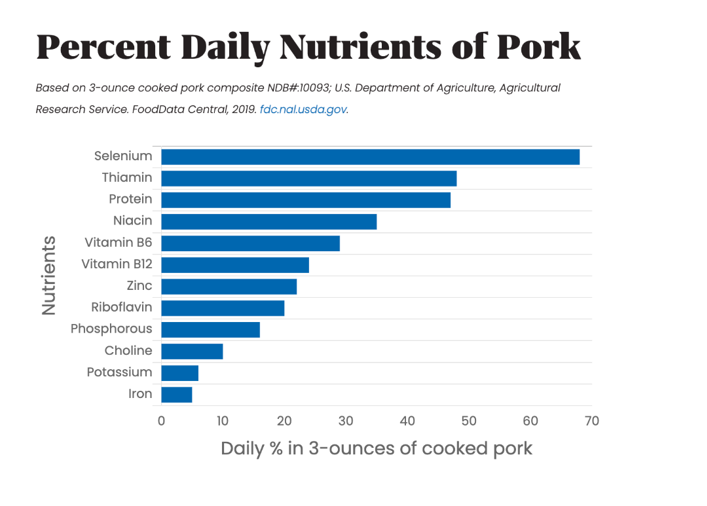
The updated guidelines recommend high-quality protein foods as part of a healthy eating pattern. Pork is a nutrient-dense protein option that aligns well with the revised guidance. With more than 20 grams of protein per 3-ounce serving, fresh pork also contains 10 important nutrients for energy, strength and optimal health. In addition to protein, pork’s key nutrients include iron, niacin, potassium, thiamin, magnesium, phosphorus, riboflavin, zinc, and vitamins B6 and B12.
Pork Belongs on Patients’ Plates
The updated DGAs focus on whole, nutrient-dense foods, which reiterate pork’s role in a healthy diet as a high-quality protein option. As a versatile protein, pork provides individuals with many of the nutrients they need for optimal health. Healthcare professionals can educate their patients on pork’s nutritional value and versatility while owning their vital responsibility to support, encourage and guide Americans toward long-term health and well-being.
For evidence-based patient education materials, resources, peer-reviewed research and nutrient-dense recipes, visit pork.org/porkandpartners.