
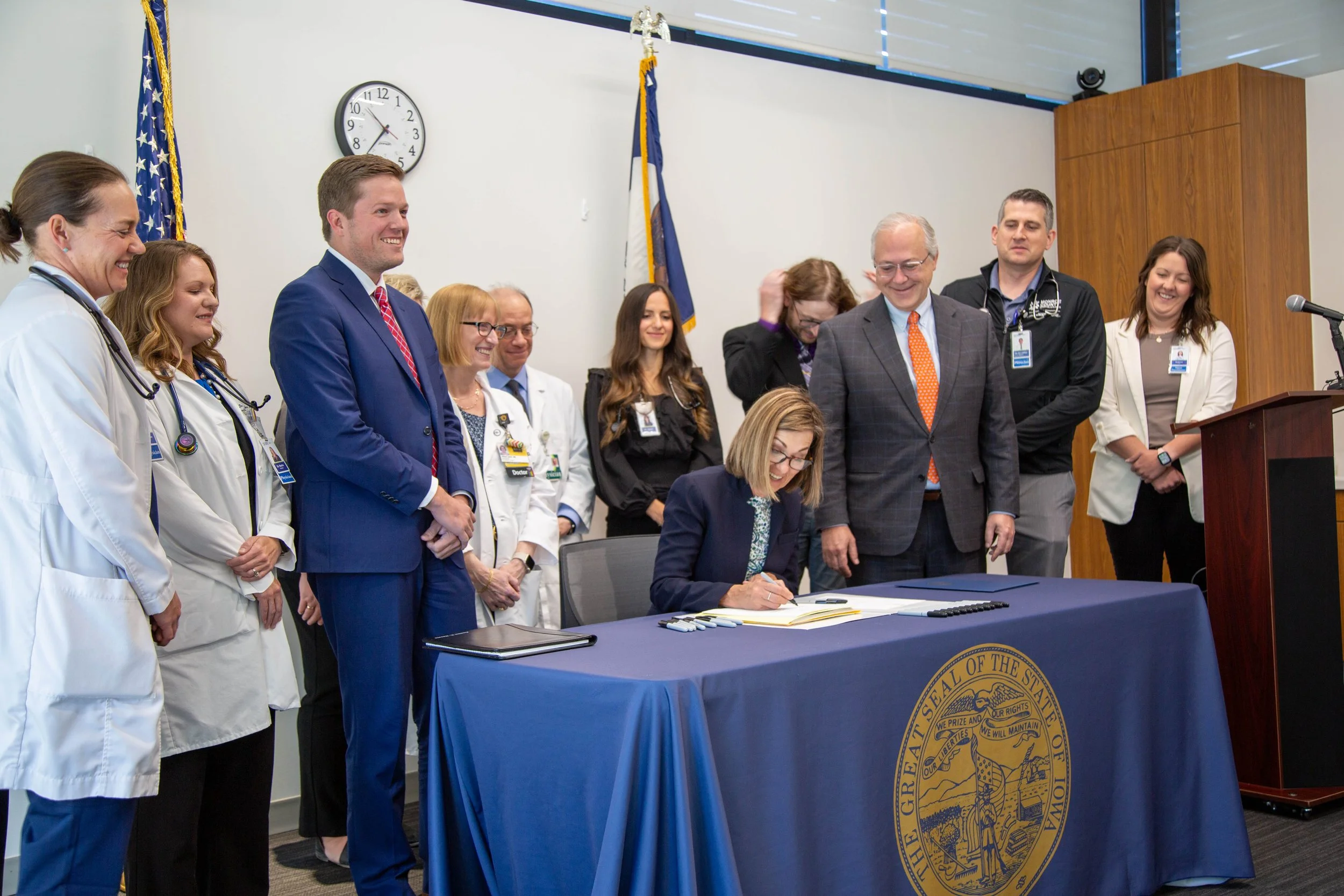
Iowa Governor Signs Patients First Legislation Supported by Iowa Hospital Association
The Iowa Hospital Association (IHA) today celebrated Governor Kim Reynolds’ signing of HF2635, the Patients First insurance reform bill, a major piece of legislation championed by Iowa hospitals and health systems. The new law is designed to improve patient access to care and reduce unnecessary administrative burdens that delay treatment.

Explore LifeCircle: Click, Learn, Connect
Earlier this year, SDAHO launched an updated and expanded LifeCircle website, making it easier than ever to find resources, education, and opportunities to stay engaged.

Iowa Legislature Passes Patients First Insurance Reform Legislation with Overwhelming Bipartisan Support
The Iowa Hospital Association (IHA) today announced a major legislative victory for Iowa patients and health care providers as the Iowa Legislature passed IHA’s Patients First insurance reform legislation with broad bipartisan support.

JLG Architects and Sanford Health Partner to Support Athlete Mental Health at Summit League Basketball Championships
As part of JLG Architects’ ongoing efforts to champion mental health within its Sports and Healthcare Studios, the firm is partnering to provide dedicated mental health rooms for student-athletes during the Summit League Basketball Championship, held March 4-8 in Sioux Falls, S.D.

Best Practices in Documentation: Caring for Patients Unable to See Mental Health Specialists in a Timely Manner
At a time when so many people are in need of mental health services, what is the best way to protect yourself when your patient can't get a timely appointment? The experts at COPIC say proper documentation is key.

Iowa Hospital Association Releases Statement on U.S. Senate Vote Advancing the One Big Beautiful Bill Act
We are deeply concerned about the U.S. Senate’s vote to advance the One Big Beautiful Bill Act (H.R. 1), and the effect the steep Medicaid cuts will have on Iowa's hospitals and the patients they serve. Rural hospitals already operate on thin margins, and these Medicaid cuts will exacerbate their already strained financial situations. Cuts of this magnitude will force hospitals to make tough decisions about reducing services or closing altogether.

Good Samaritan to Participate in Congressional Briefing in Nation’s Capital
Good Samaritan– the nation’s largest non-profit provider of senior care and services – will advocate for solutions that advance quality care and strengthen the long-term care workforce. Leaders will meet with elected officials at the 2025 American Health Care Association/National Center for Assisted Living (AHCA/NCAL) Congressional Briefing June 9-11 on Capitol Hill in Washington, D.C.

Lessons in Liability: Against Medical Advice
Against medical advice discharges can be both distressing and dangerous, both because of the health risks to the patient and the liability risks to the provider.

No News Is Not Good News: Overlooked Diagnostic Test Results
Diagnostic test results are a critical component of patient care and the tests we order are increasing in numbers and complexity. Missed or delayed follow-up can lead to adverse outcomes, including delayed diagnoses, unnecessary complications, and potential medical liability claims…

New IHLA Member Benefit: Meet The New Government Relations Advisors
The Iowa Healthcare Leaders Association has announced an exclusive new benefit for members : Government Relations Advisors. Working with the IHLA Legislative Committee, this team is here to provide insights, guidance, and advocacy.

Managing Challenging Patient Interactions
Difficult patient encounters are something all medical providers may face and patient factors such as strong emotions, somatization, unrealistic expectations, and mental health issues commonly contribute to these.

Virtual Scribing: Using AI in Medical Practices
The benefits of using AI tools to quickly and accurately generate a record of clinical interactions are obvious. However, there are many considerations to examine before implementing the use of such tools.

How DTB Systems Makes Healthcare Buildings Smarter
Dynamic Technical Building Systems (DTB) is a systems integrator providing sales, service, support, and consulting for Nurse Call, and a variety of communication and workflow management systems in healthcare facilities across the Midwest. Here’s how they help make buildings smarter.

AMA Survey Indicates Prior Authorization Wreaks Havoc on Patient Care
Turmoil caused by excessive authorization controls leads to serious or life-threatening events for patients, unnecessary waste, and physician burnout, according to the latest survey from the American Medical Association (AMA).

The Importance of an Accurate Problem List
COPIC expert Eric Zacharias, MD, with a case study that illustrates how, during routine screening visits, symptomatic evaluations can be lost to follow up.

Artificial Intelligence in Medicine (Part 2)
As the use of AI in healthcare ramps up, there is an ongoing necessity for healthcare systems to regularly assess the impact and risks of AI as its development and deployment is outpacing legal, medical, or business changes.

Know Your Enemy
Each year, the Emergency Care Research Institute issues its Top 10 Health Patient Safety Concerns. Their most recent report identifies the top ten concerns to be aware of now.

Artificial Intelligence in Medicine
The use of artificial intelligence (AI) applications is the most important new information technology in decades that will change healthcare. This creates an ongoing necessity for healthcare systems to regularly assess the impact and risks of AI as its development and deployment is outpacing legal, medical, or business changes.

The CURES Act Information Blocking Rule: 5 Practices to Avoid
As of April 5, 2021, all healthcare providers are required to comply with the 21st Century Cures Act Information Blocking Rule. To assist in your compliance with this complex regulation, here are five practices to avoid.

The Final Act of Care: Completing a Death Certificate for Your Patient
The accuracy of the death certificate is vital to the patient’s family and public health reporting. It can also have long-term ramifications, including provider defensibility.