The Way Forward
The Behavioral Health & Wellness Center at Children's Nebraska Redefines Care for Kids in Crisis
By Alex Strauss
Jennifer McWilliams, MD, MS, division chief of Pediatric Psychiatry at Children's Nebraska in Omaha dreams of a day when the work she does is no longer needed and she can "go open a bookstore".
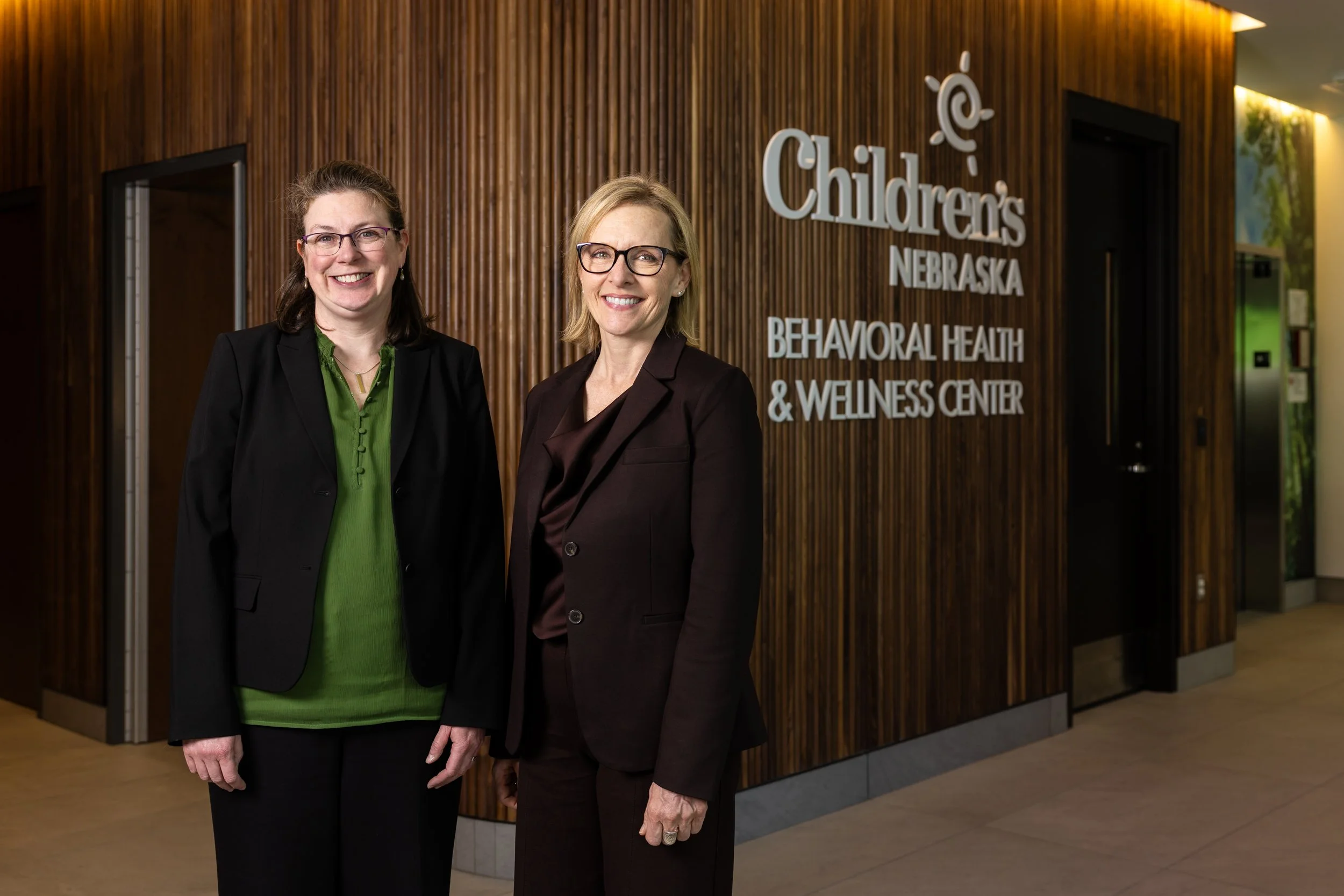
Dr. Jennifer McWilliams and Renee Rafferty
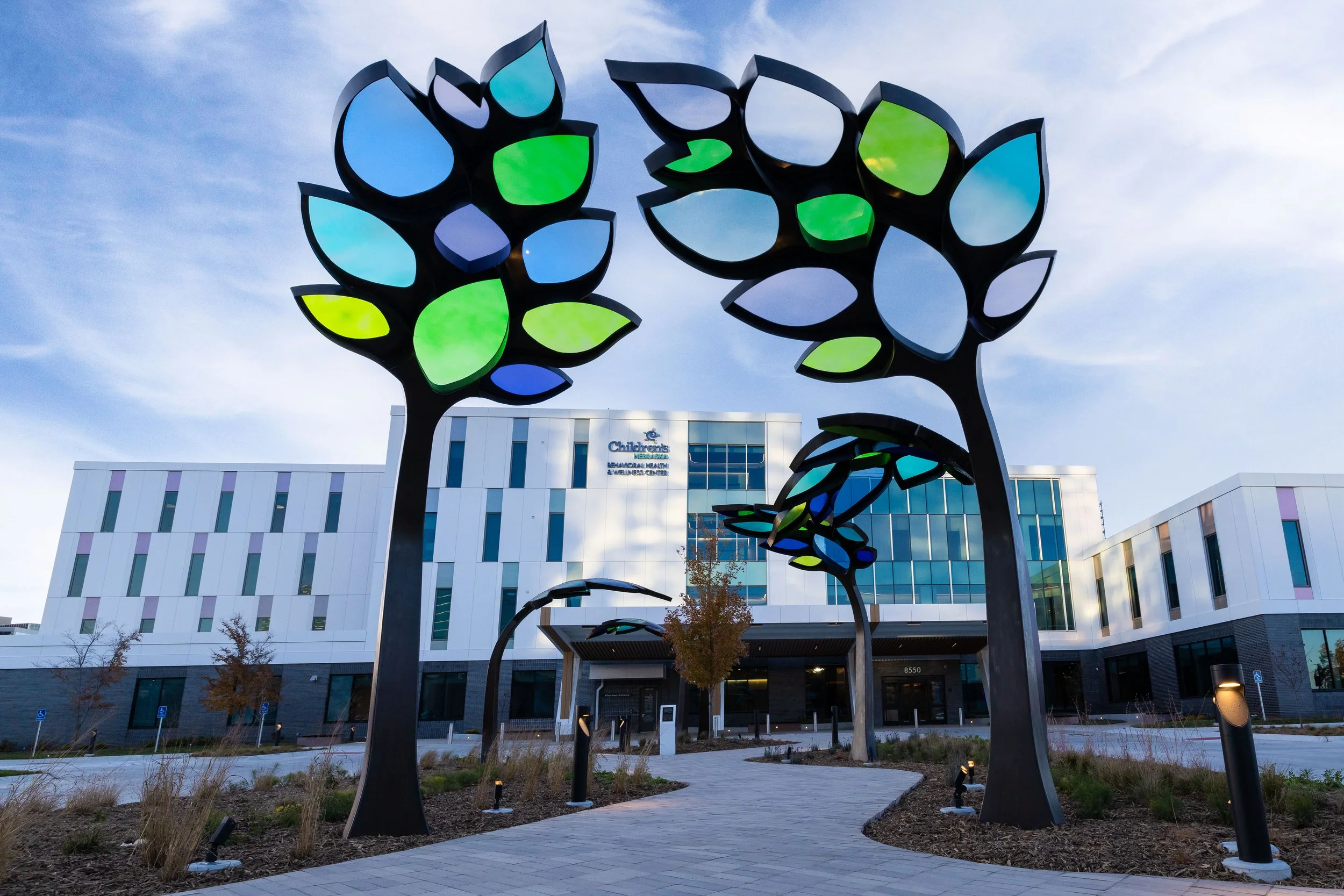
"My goal is to put our inpatient unit out of business," says McWilliams. She means it as the highest possible compliment to the $114 million, 107,250 square foot Behavioral Health & Wellness Center (BHWC) that opened on the Children's Nebraska campus in January.
The goal isn't really to close anything down. It's to intervene early enough, and broadly enough, that fewer kids ever reach the point of needing inpatient psychiatric care. That ambition is built into every detail of the new center from its 24/7 walk-in crisis assessment services to its full spectrum of outpatient and inpatient care, all under one roof.
"Children make up 20 percent of the population but they are 100 percent of our future" says McWilliams. "Pediatric mental health has always been important.But in the last decade, the profound impact of things like social media, the pandemic, and life in general, has become even more noticeable."
A Crisis That Couldn't Wait
The numbers bear that out. One in five children in the United States experiences a mental health condition each year. In Nebraska, 90 counties are considered mental health poverty areas. A third of those counties have no behavioral health provider at all.
"The system is broken and families and kids often don't know where to go," says Renee Rafferty, MS, LIMHP, LPC, senior vice president of behavioral health and wellness at Children's Nebraska. "Many times, families have had to go to an Emergency Department and either be assessed as an inpatient or get on a waitlist. We wanted to change that."
What the BHWC offers instead is something the region has not had before: a "no wrong door" policy for self-referral and a seamless continuum of mental health services for children and teens, positioned right alongside primary care — a deliberate signal that mental health and physical health are inseparable.
Families or individuals can walk in 24 hours a day, seven days a week, with no referral and no appointment. Each child is evaluated in a crisis assessment center and connected to the level of care they need, whether that's a brief intervention and a plan, a partial hospitalization program, or admission as an inpatient.
"We have almost the full spectrum of care," says Dr. McWilliams. "Primary care, outpatient behavioral health, inpatient care, partial hospitalization programs, and a crisis assessment center with an urgent care component. The goal is for the majority of kids who just need a day of stabilization to not have to be hospitalized."
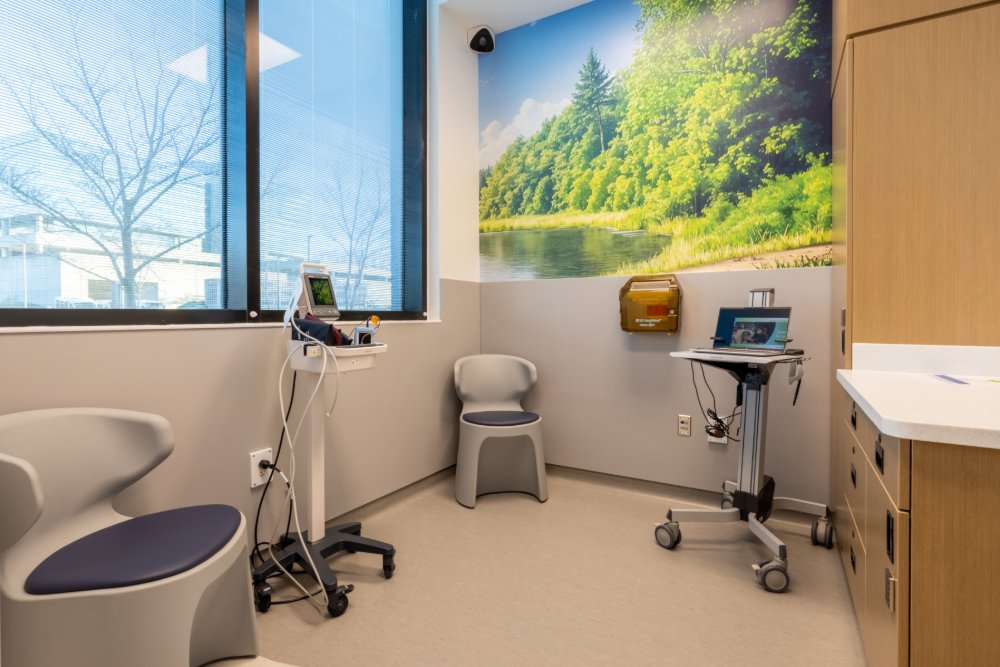
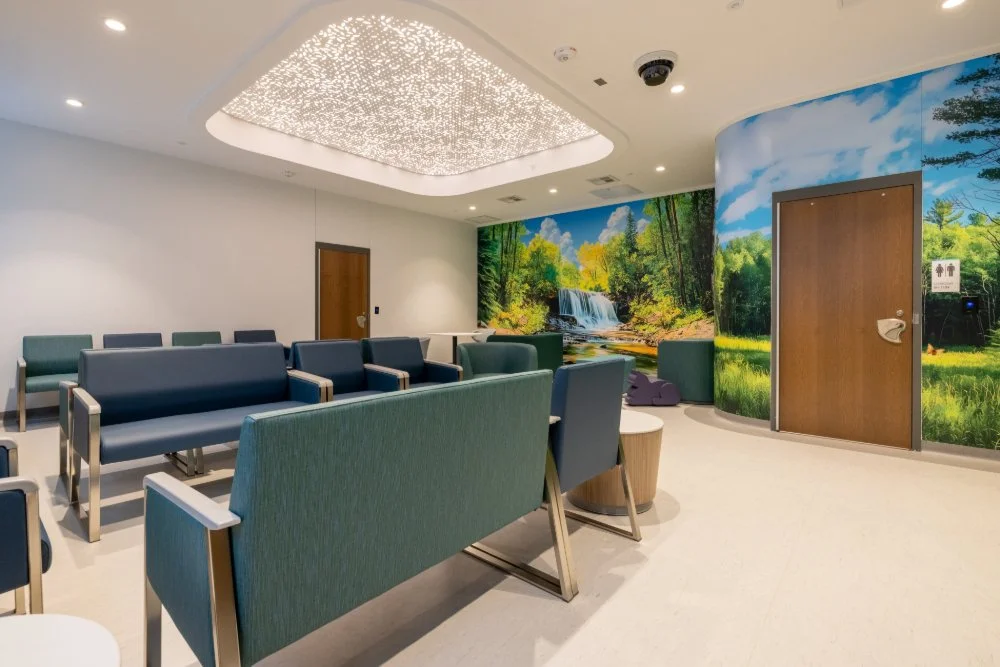
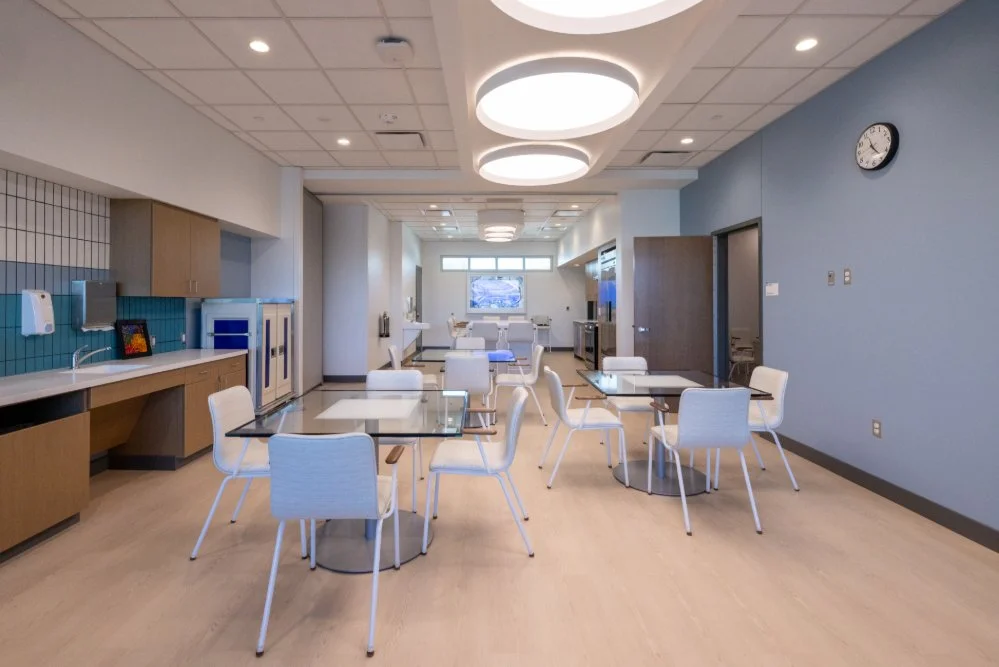
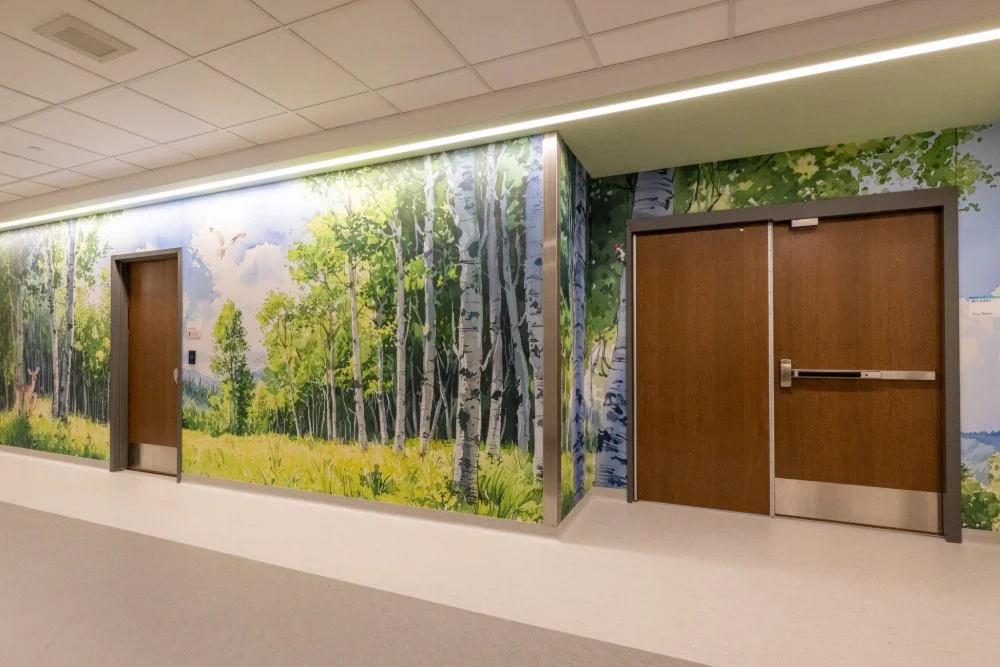
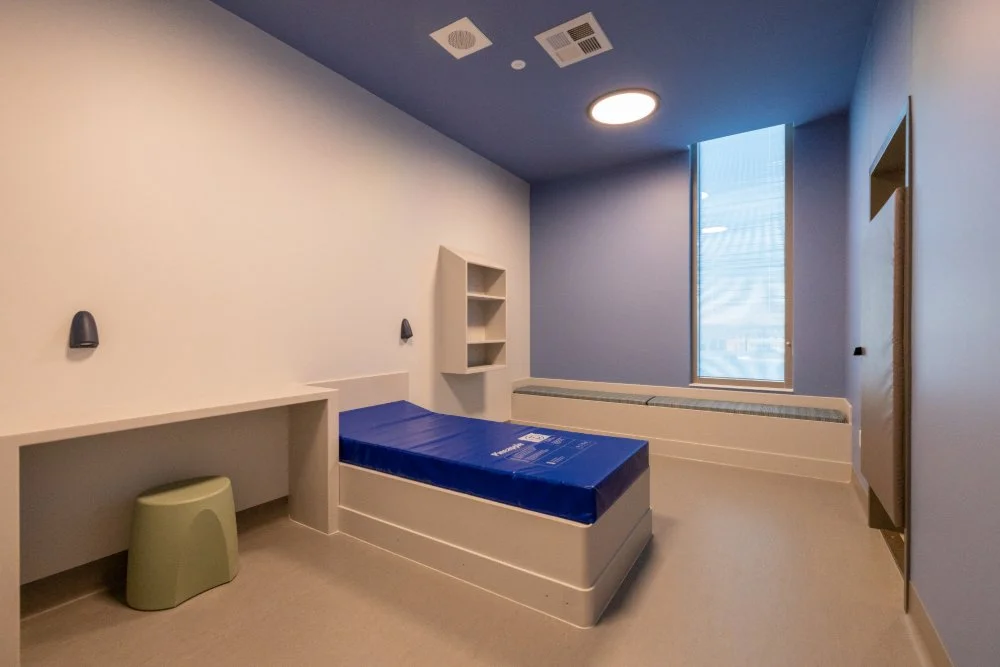
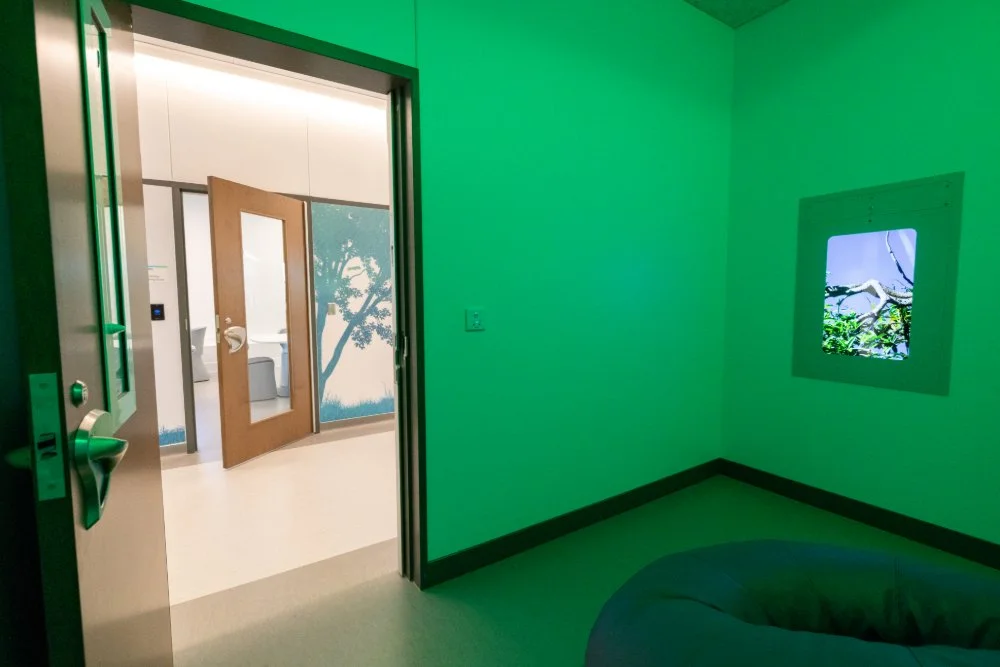
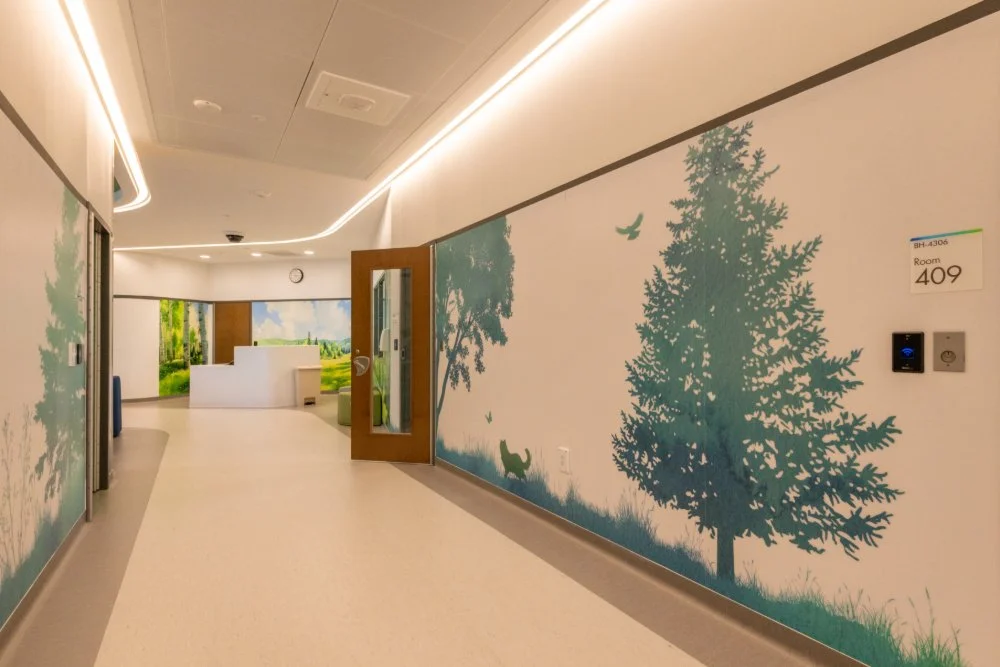
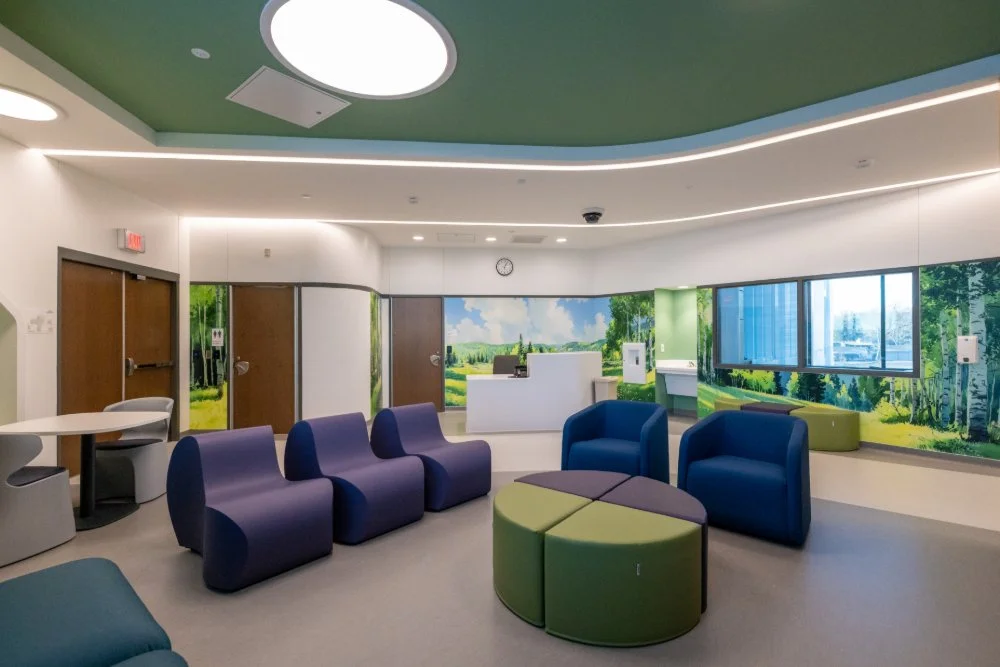
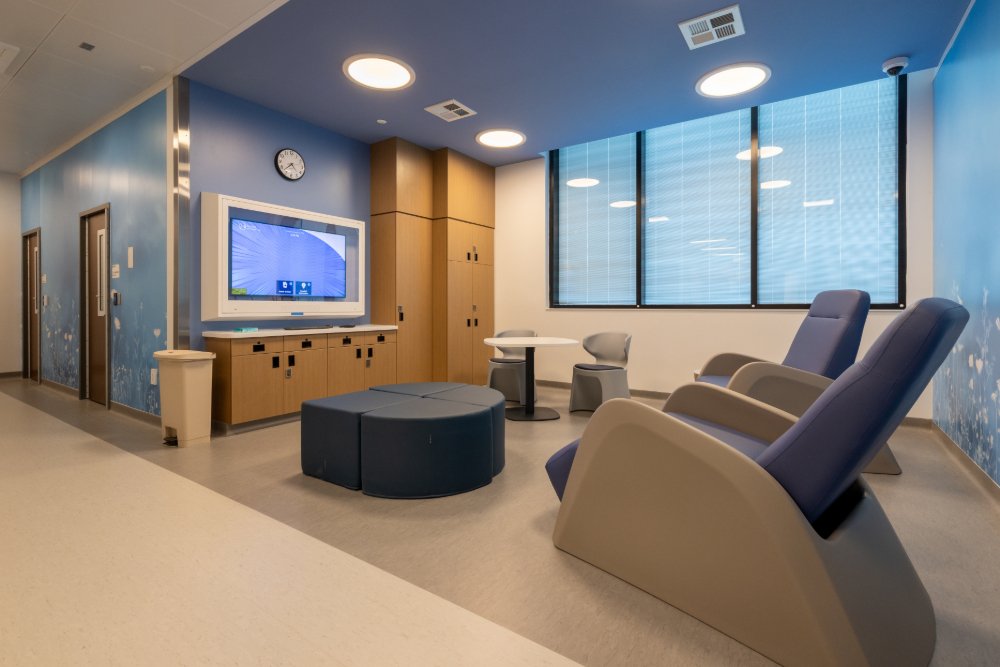
For patients who do need hospitalization, the inpatient units were designed to feel nothing like a traditional hospital. Children from the community helped choose colors, furniture, and graphics. Calming murals cover the walls with hidden animals tucked into the design. Electronic CoWin panels throughout the space let patients listen to music, draw, or watch videos. And the 40 inpatient spaces are arranged into open-plan 8-bed mini-units where kids are able to connect with each other.
"Every detail incorporates safety, but it looks like a healing design," says Rafferty.
Built for the Whole Child
Dr. McWilliams describes the philosophy driving the BHWC as a biopsychosocial model which considers each child holistically.
"There are biological factors that affect mental illness. There are psychological and temperament components. And then there are social impacts," says McWilliams. "It is vital to bring in all aspects of the child and their family."
Her own clinical mantra is simple: "Skills before pills. If I'm just prescribing medications and we aren't looking at the root problems, that is only going to be a temporary fix."
That is also why family engagement is such a central part of care here. "A child might have a condition that requires help, but without the engagement of the family, they won't get that full healing," says Rafferty. "Oftentimes, everyone can grow through this experience."
A Resource for the Region
As of mid-April, the crisis assessment center had served more than 1,600 children, with nearly 400 admitted for inpatient care. In fact, the center filled to capacity within four days of opening, months ahead of projections.

"We aren't worried about making our numbers anymore," says Dr. McWilliams. "It really just highlights how many kids are in need."
Those kids are coming from across the region, including Iowa, South Dakota, Kansas, and more than 100 communities throughout the region. And when they return to those communities, a new bridge care program is designed to connect them to ongoing support.
For concerned families or providers on the fence about making a behavioral health referral, Rafferty has this message: "Don't wait. We sometimes think about these services only in terms of the highest level of intervention. But a crisis can just be that a child is refusing to go to school or is depressed because of a social situation. We let the family define the crisis."
Children's' commitment to behavioral healthcare extends beyond the campus to specialty care and outpatient clinics, schools, and telemedicine access for rural residents. But the new building is the most visible symbol of that commitment. For Rafferty, it is a testament to what a community can accomplish when it decides that a problem is too important to ignore.
"This building is such a big symbol of hope and people are going to see it for generations," she says. "We want the message to be that it's OK to struggle, that everyone has challenges, and that you can get to the other side."
Want to know more?
Read more about Children's Behavioral Health Urgent Care clinic in Kearney, Nebraska
Learn about the COPE (Children's Outreach and Provider Education) program for primary care providers that offers tools and resources to treat pediatric mental health concerns they see in their practices.
See more!