
Putting Telemedicine in Motion; First-of-its-Kind Program Keeps Ambulances Connected in the Field
By Alex Strauss
Telemedicine has been an increasingly important part of healthcare delivery in recent years, especially in rural areas. But the pandemic catapulted the technology to new heights. The ability for physicians to connect with patients remotely, and for specialists to connect with providers in far-flung locations has truly been a game-changer.
But one group of healthcare workers in South Dakota have traditionally been unable to access the benefits of telemedicine. Emergency Medical Services, which often deal with the direst of health situations in the remotest parts of the region, were excluded from access simply because of the mobile nature of their work and the limitations of the technology.
Now, a new $1.7 million state program is changing that. Launched late last year, Telemedicine in Motion is a South Dakota Department of Health initiative in partnership with Sioux Falls-based telemedicine provider, Avel eCare. The program enables participating EMS companies to get round-the-clock virtual access to Avel's team of board-certified emergency physicians and nurses in real time, in the field.
"This has been something that has been discussed internally for years. People have talked about teleEMS but the technology just wasn't there," says Sioux Falls emergency medicine physician Tyler Price, MD, Medical Director of Emergency at Avel eCare. "But the technology has really come along. When the state announced this initiative, we felt strongly that, with our history in eEmergency, this was a natural fit. We had the infrastructure in place."
Access in the 'Golden Hour'
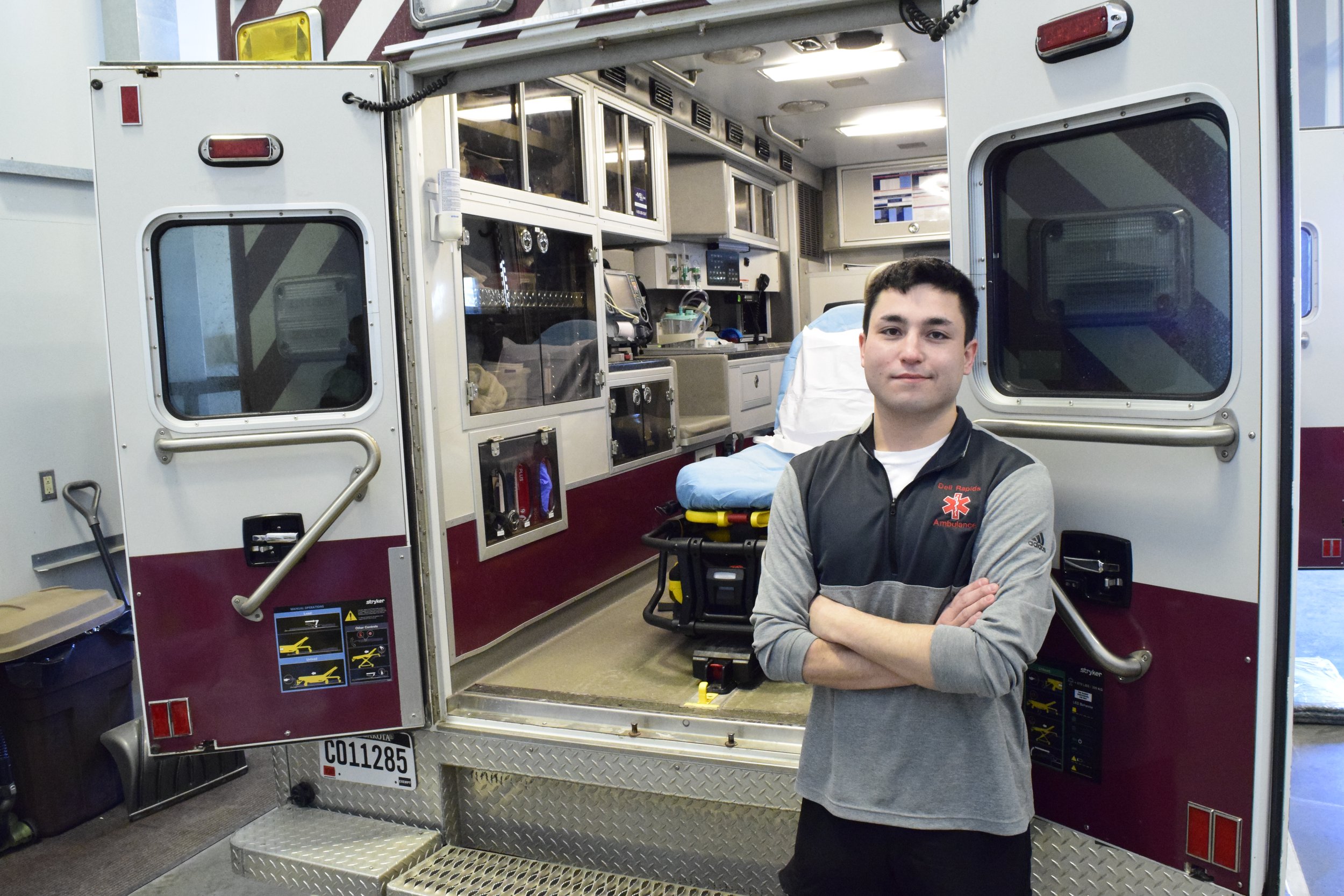
Last November, Dell Rapids Community Ambulance Service became the first pilot test site for the new program. A smaller department with a staff of just 25, Dell Rapids Ambulance responds to about 500 calls a year in and around northern Minnehaha County and the communities of Dell Rapids, Baltic, Colton, Lyons and Crooks.
"We are mostly an ALS (Advanced Life Support) service, staffed by paramedics rather than EMTs," says Director Ryan Sittig. Sittig has been a paramedic in Dell Rapids for 24 years and has served as director for half that time. He says one of the biggest benefits for a small operation like his is simply the ability to reach a physician when their own medical director is unavailable.
"In a small community in rural South Dakota, it is not always easy to connect with your medical director. That person can't be available all the time," says Sittig. "We have had a few cases where it has really been nice for the providers to be able to communicate with an ED physician and have a question answered, an order received, or just the confirmation that what they're doing is correct."
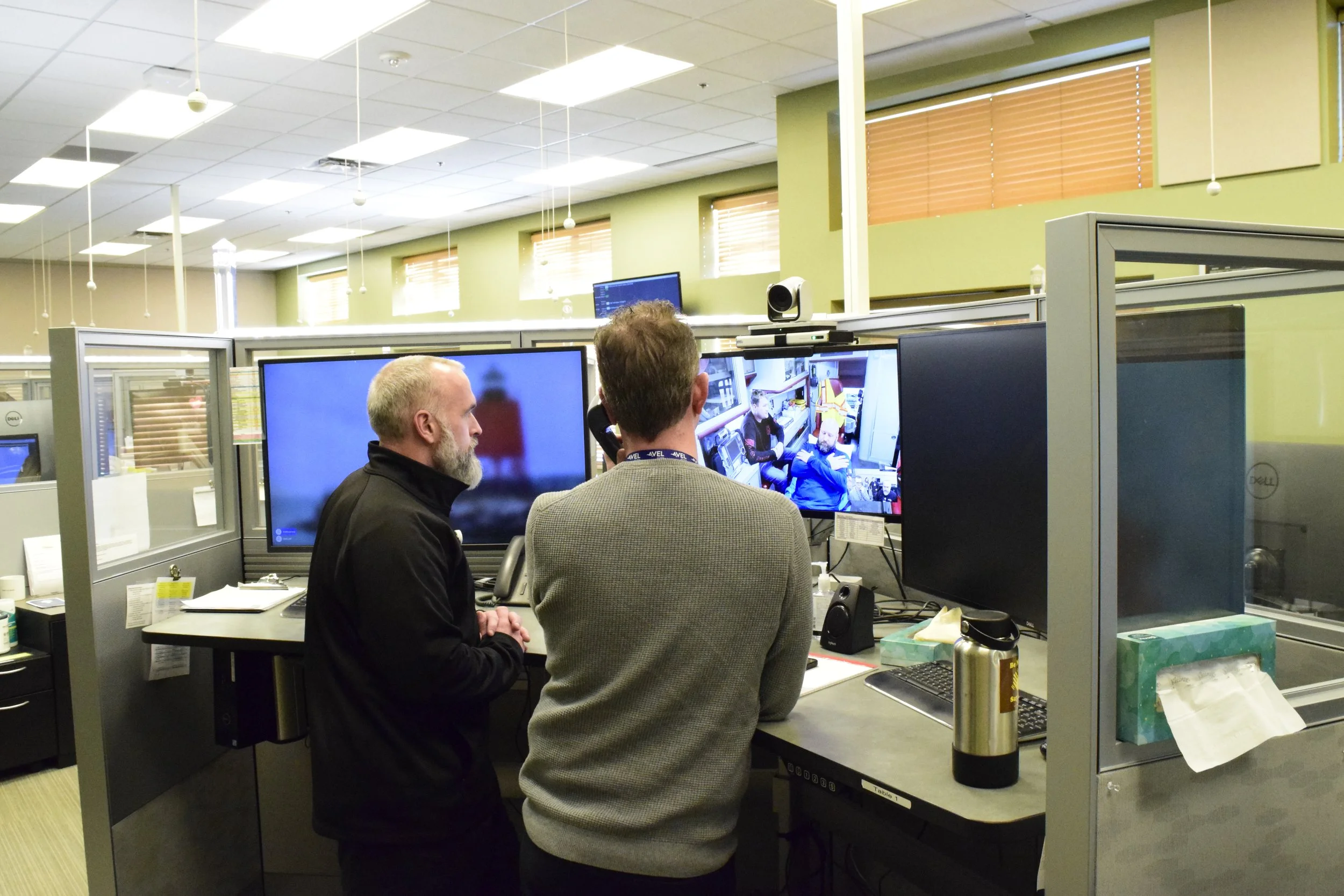
At any time, a participating EMS company can request a dispatcher to connect them with Avel EMS. Within seconds, a provider at Avel's eHub in Sioux Falls can dial directly into a dedicated iPad installed in the back of the ambulance to connect with a live audio and video feed.
"The speaker is mounted in the rig where they prefer to have it and an iPad is mounted right inside and to the right so that we can see the patient and the crew," says Dr. Price. "The goal is to give them access to an ER nurse or an ER physician during that first 'golden hour' because time is tissue,"
That access can reduce the time workers have to spend on the scene, allowing for faster transport. If it looks like a transport to a larger trauma center is needed, Avel can coordinate that, too, speeding up the process while freeing first responders to focus on the patient. They can even provide interpretive services if there is a language barrier.
"For us on our side, this is going to give us the ability to take more complex or critical calls with confidence," says Sittig.
Pioneering Telemedicine
In phase one of the rollout, the Telemedicine in Motion initiative will outfit an ambulance at 60 of the state's 122 EMS providers with a cabin-mounted telehealth tablet, microphones, speakers, antennas, and cellular boosters by June. Avel teams go to each site to install the technology and spend a few hours training each team to use it.
"We want to be there with them to teach the workflow and to answer questions so that everything runs smoothly when they go live," says Dr. Price. Price remembers the frustration of working in a trauma center himself under the "old" model of eCare, trying to field emergency calls from outlying facilities while tending to his own critically ill patients.
"Now, I can actually see the people I'm working with and their patients," he says. "It has been a marked transformation. It really feels like we are doing something that is truly affecting patient care. This is pioneering telemedicine and it's exciting."
Saving Lives and Preserving EMS
To call the initiative "pioneering" is no exaggeration. Telemedicine in Motion is the first program of its kind in the country. With 16 sites connected as of mid-February and 80 calls under their belt, both the program and the tech appear to be working as expected. Although they have briefly lost video signal for a few moments in very remote locales, Price says they have yet to lose audio.
More importantly, the program is saving time and increasing efficiency for EMS workers on the ground.
"We used it recently on a post cardiac arrest call with 40 minutes transport time to Pierre," says Matthew Hardwick, Operations Supervisor at American Medical Response in Pierre, one of the largest companies taking part in the program. Hardwick and his EMS colleagues cover a territory of more than 2,000 square miles in central South Dakota.
"We were able to reduce our time at the scene to less than five minutes and do more things in route because we had that extra set of eyes and ears and the ability to bounce ideas off of someone else," says Hardwick, who has been a paramedic since 2008.
With dwindling numbers of volunteers and even paid staff, Hardwick predicts that response times statewide will likely increase, making that kind of efficiency even more important for positive patient outcomes. Additionally, the hope is that, by helping first responders feel more supported in the field, the program will also help with recruitment and retention and ensure a healthy future for South Dakota's EMS companies.
"You can only train people so long," says Hardwick. "You can't be with them all the time. This provides that extra level of support, especially for newer medics. I definitely think it's something that is going to stick around and grow."
WEB EXCLUSIVE CONTENT:
Telemedicine in Motion Landing Page: EMS Initiatives - SD Dept. of Health
Community Flyer: https://doh.sd.gov/documents/EMS/EMS_Community_Overview.pdf