
Advanced Proton Therapy System Arrives at Fred & Pamela Buffett Cancer Center Saturday
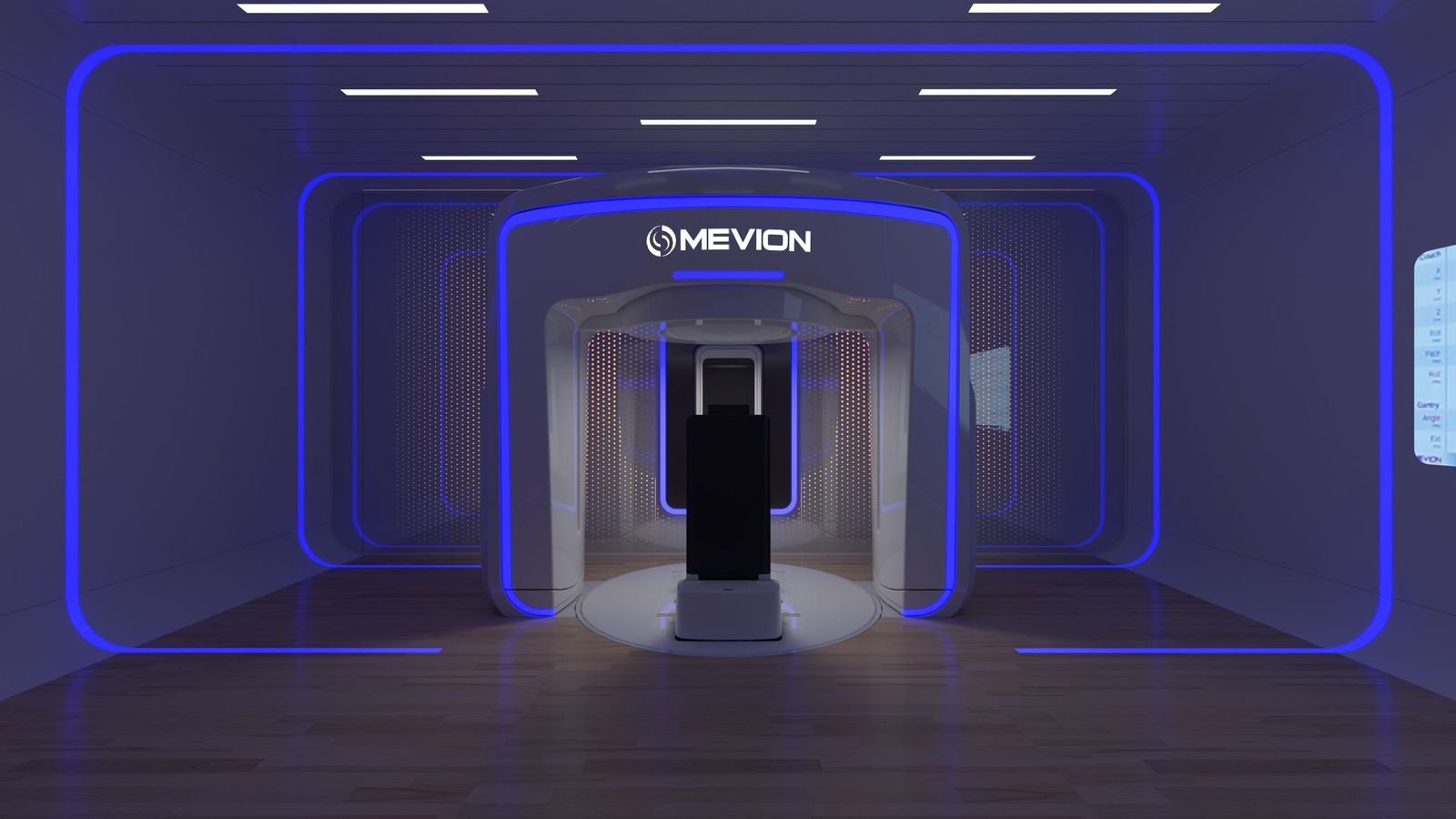
The Fred & Pamela Buffett Cancer Center will reach a major milestone Saturday as a state-of-the-art proton beam therapy system is scheduled to arrive on campus. It’s the first proton beam system in Nebraska, marking a significant step forward in bringing advanced cancer treatment to the state and region.
The Fred & Pamela Buffett Cancer Center is the only National Cancer Institute-designated cancer center in Nebraska, reflecting its commitment to advancing cancer research and delivering world-class care to patients across the state.
The Mevion proton therapy system was transported from Boston and will be carefully installed at the cancer center, where it will expand treatment options for patients across the region. Once operational, the system will deliver highly targeted radiation therapy designed to precisely treat tumors while minimizing damage to surrounding healthy tissue.
“We’ve been working for a long time to bring this to our patients,” says Charles Enke, MD, Nebraska Medicine radiation oncologist and chair of the Department of Radiation Oncology at UNMC. “The large size of the older machines was a barrier in the past. But the Mevion S250-FIT is more than 50% smaller than traditional proton therapy systems and fits into a single treatment room instead of an entire multi-room facility.”
The arrival of the proton therapy system builds on Nebraska Medicine’s partnership with Mevion Medical Systems and reflects years of planning and investment to bring the technology to the state.
“This advanced proton therapy system opens doors for us to explore new frontiers in cancer treatment,” says Joann Sweasy, PhD, director of the Fred & Pamela Buffett Cancer Center. “We are committed to pushing the boundaries of proton therapy research and bringing the latest advancements to our patients.”
Proton therapy represents a breakthrough in cancer care, offering new hope for patients with complex or hard-to-treat cancers. The technology uses charged particles to deliver radiation that stops directly at the tumor site, reducing side effects and improving quality of life compared to traditional radiation approaches. Until now, patients in need of this therapy had to travel long distances to receive care since there are fewer than 50 centers in the U.S. providing this treatment.
“For us, this will be the first proton therapy center in the state of Nebraska,” emphasized Dr. Enke. “Currently there are no proton therapy facilities in Iowa, North or South Dakota, not even in Colorado, despite Denver being a large metropolitan area.”
The central part of the United States is often referred to as a “proton desert” because most of the centers are on the east and west coasts.
“There are 200,000 patients in the US each year who meet accepted indications for proton therapy but can't receive this treatment because the nearest proton therapy treatment facility is too far away,” says Dr. Enke. “We will be able to help those patients who live in Nebraska and the surrounding areas.”
“This installation represents a pivotal moment for our cancer program and for patients across Nebraska and the region,” says Michael Ash, MD, CEO of Nebraska Medicine. “This investment reflects our commitment to bringing the most advanced cancer treatments to our patients and expanding access to cutting-edge care close to home.”
Proton therapy is expected to be available to patients by spring of 2027, expanding the scope of our top tier cancer care and reducing the need for patients to travel long distances for treatment.
WHAT: Arrival of proton beam machine at Fred & Pamela Buffett Cancer Center
WHEN: Saturday, June 6, approximately 1:00 p.m. when machine will be lifted by a crane
WHERE: North side of the Fred & Pamela Buffett Cancer Center, 505 S. 45th St.
PARKING: Map is attached – enter from the north at 44th and Dewey