
Playing the Long Game: At 80, McFarland Clinic's Physician-Owned Model Is More Relevant Than Ever
By Alex Strauss
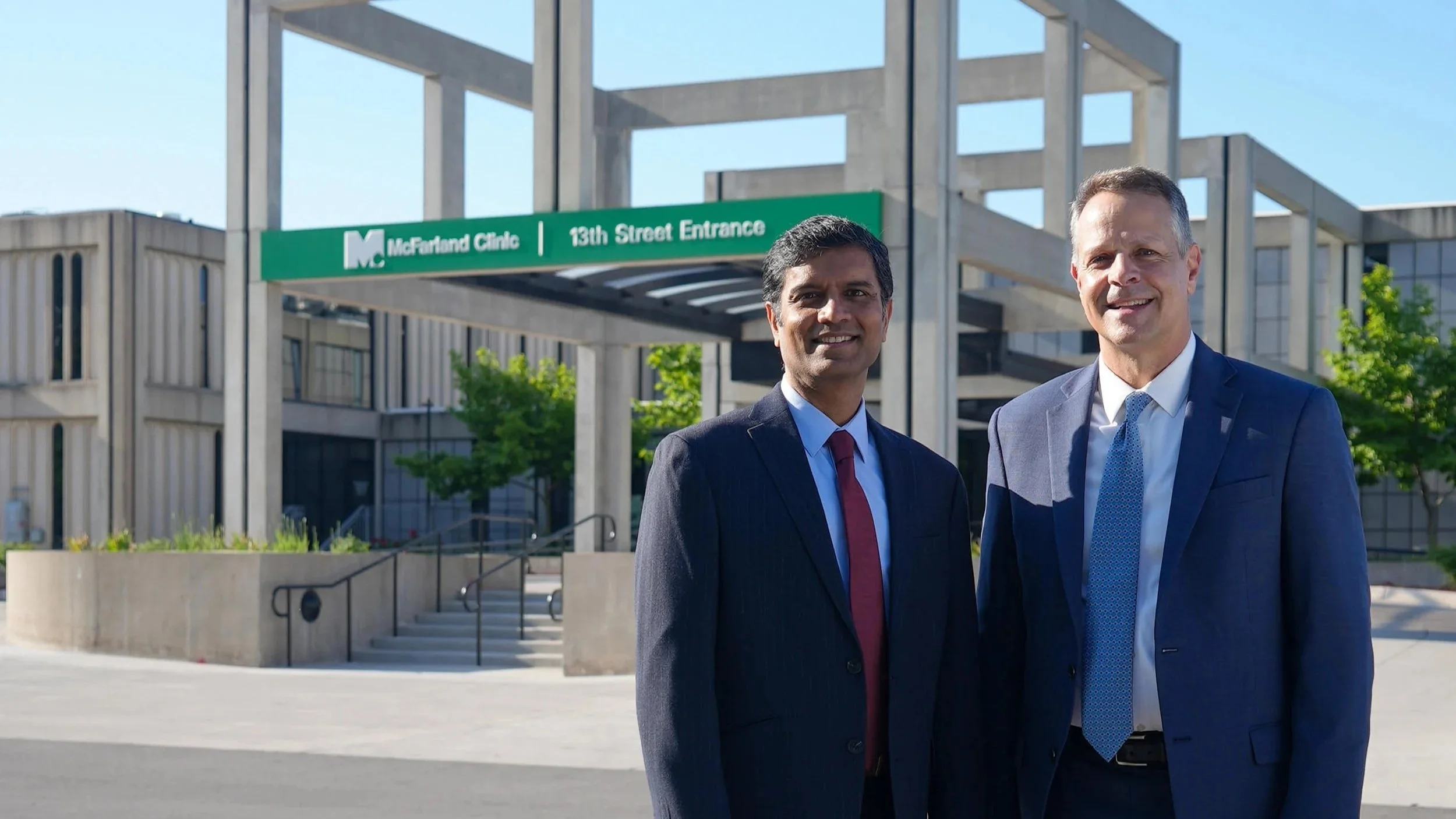
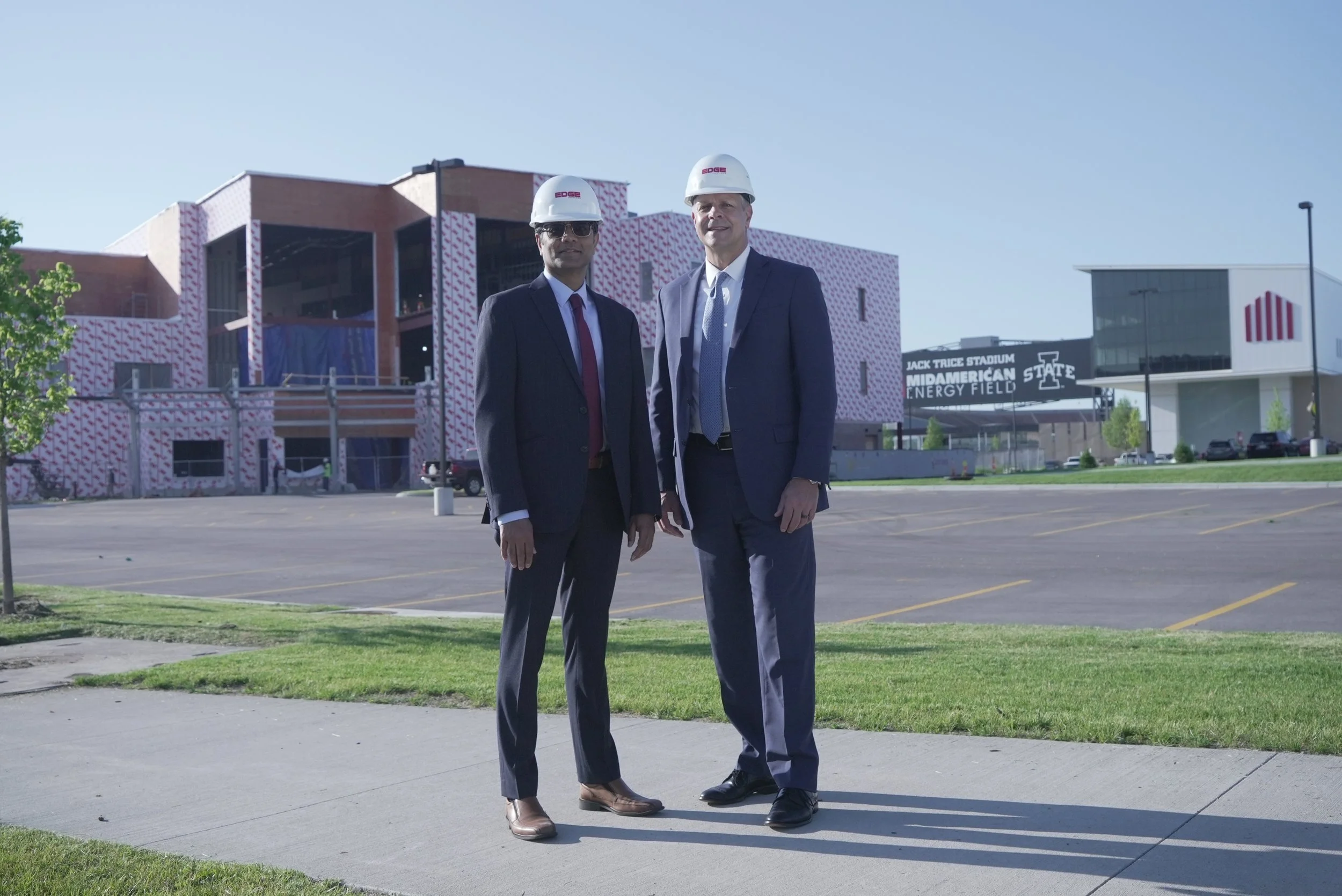
Anand Shah and Andrew Perry
Andrew Perry grew up in Colorado and spent a decade at the helm of a large multi-specialty group in Corvallis, Oregon. Iowa wasn't really on his radar until his longtime mentor, who had led McFarland Clinic in Ames for the previous 14 years, suggested he take a closer look.
"I knew what kind of organization McFarland was," says Perry. "When I had the opportunity to come here, I saw the move not just as a professional growth opportunity, but also as an opportunity to join a high performing group, a group that had a good track record of success. I think that has played out very, very well."
Perry has now served as the CEO of Iowa's largest physician-owned multi-specialty clinic for nearly 12 years. Founded in January 1946 as one of the state's first multi-specialty groups, McFarland now has 338 providers and more than 1,100 staff. The clinic serves patients across 11 central Iowa communities, with specialists traveling to 9 additional outreach locations throughout the region. More than one million patients visit a McFarland Clinic location every year.
In an era when independent physician practices are consolidating into large health systems at a record pace, McFarland hasn't just held its ground. Eight decades in, it's still setting the pace.
Skin in the Game
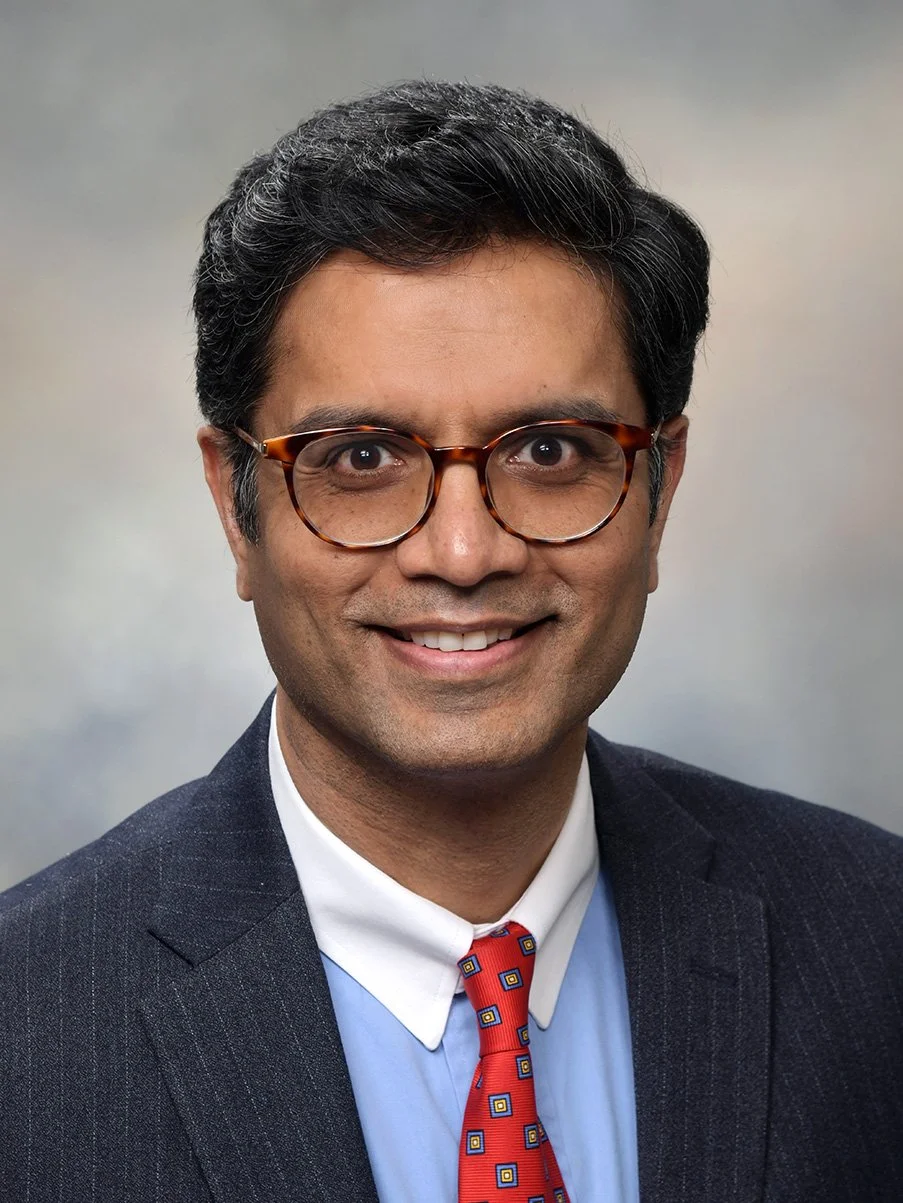
For Chief Medical Officer Anand Shah, MD, the difference between physician-owned and system-employed medicine isn’t theoretical. Shah spent the first 25 years of his career in Minnesota, starting with eight years of full-spectrum family medicine in a small town before moving into clinical and administrative leadership at HealthPartners. When he joined McFarland just over two years ago, he noticed the contrast right away.
"Physician autonomy is the biggest difference," says Shah. "Physicians are owners of the organization, so they're responsible for every decision that's made. It's easier to engage physicians here because they have skin in the game. In a large health system, the transparency is less than a physician-led organization where everything is very transparent and clear."
"We're not making top-down decisions, we're facilitators of decisions," adds Perry. "From an administrative standpoint, they look at us and trust us to do the things we need to do and hold us accountable. So our decisions become more bottom-up decisions that involve the partners so that there's unity and unanimity."
Keeping Score
It’s one thing to have engaged physicians. Translating that engagement into measurable improvements in patient care is another — and McFarland has done exactly that.
The organization participates in commercial, Medicaid, and Medicare Accountable Care Organizations (ACOs) and is measured against peer groups at the state, regional (Midwest), and national levels. Within its commercial ACO, the clinic consistently exceeds benchmark performance measures for colon, breast, and cervical cancer screenings, as well as well-child visits, and adolescent well-care visits.
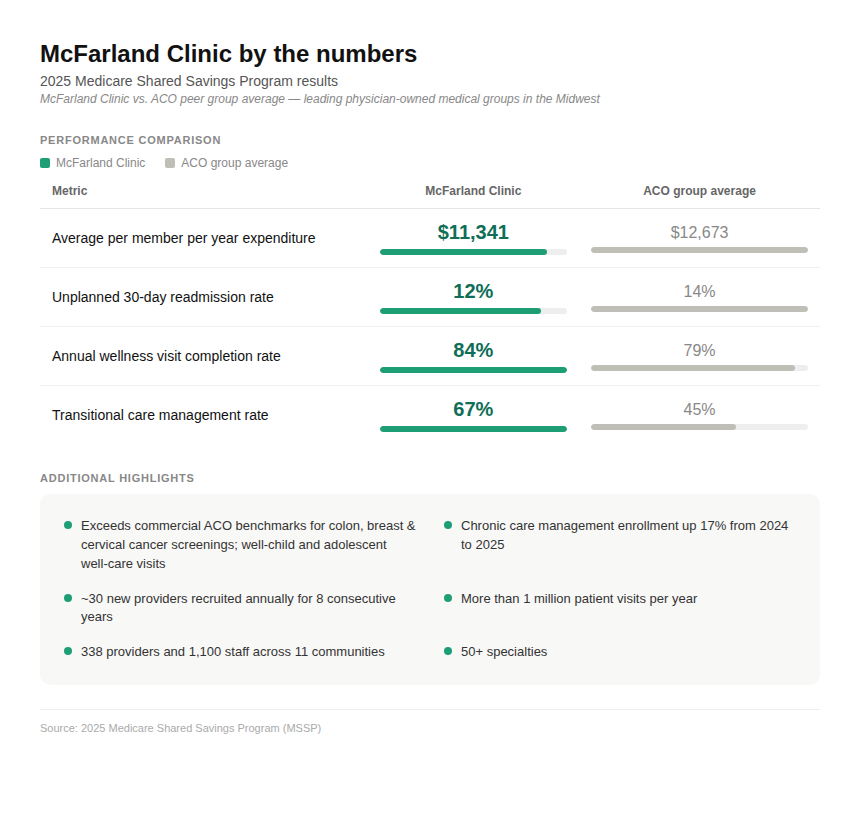
The 2025 Medicare Shared Savings Program results are where McFarland really stands out. The clinic leads its ACO in per member per year expenditure and its unplanned 30-day readmission rate sits below the ACO average. McFarland also leads the group in Annual Wellness Visit completion and Transitional Care Management (follow-up visits scheduled within one to two weeks of a hospital discharge). Dr. Shah says that's a metric he watches especially closely.
"Transitional care management is important because it reduces readmissions, ED visits, and hospitalizations," he says.
It’s a similar story for chronic care management at McFarland Clinic, which targets Medicare patients with two or more chronic conditions who will benefit from care coordination support between office visits. In 2025, McFarland enrolled 17% more eligible patients than the year before. “Patients spend more than 99% of the time outside of our offices,” says Shah. “So this is essentially in-between-visit care for our patients.”
Perry sums it up this way: "When it comes to managing care, I think what we’ve been able to demonstrate is that we can keep people out of the hospital. Our organization delivers high quality care at a cost below any of our competition in the region."
Across Central Iowa
McFarland’s 11 clinic locations span communities including primary care in Ames, Carroll, Marshalltown, Nevada, Iowa Falls, Webster City, Jefferson, and Story City, with specialists making regular trips to 9 additional outreach sites and more than 50 specialties in the network.
"We have an access clinic that was specifically designed to help patients get transferred to a new primary care provider when their physician has retired or moved on, and also to welcome new patients into the community who are moving to the area and don't yet have a primary care clinician," says Dr. Shah. "This bridges the gap so that patients don't fall through the cracks."
Sustaining all of this requires a steady stream of new providers. In the face of significant workforce challenges, especially for rural areas, McFarland is holding its own.
"Over the last 8 years or so, we've been able to add roughly 30 providers every year," says Perry.

Building the Next 80 Years
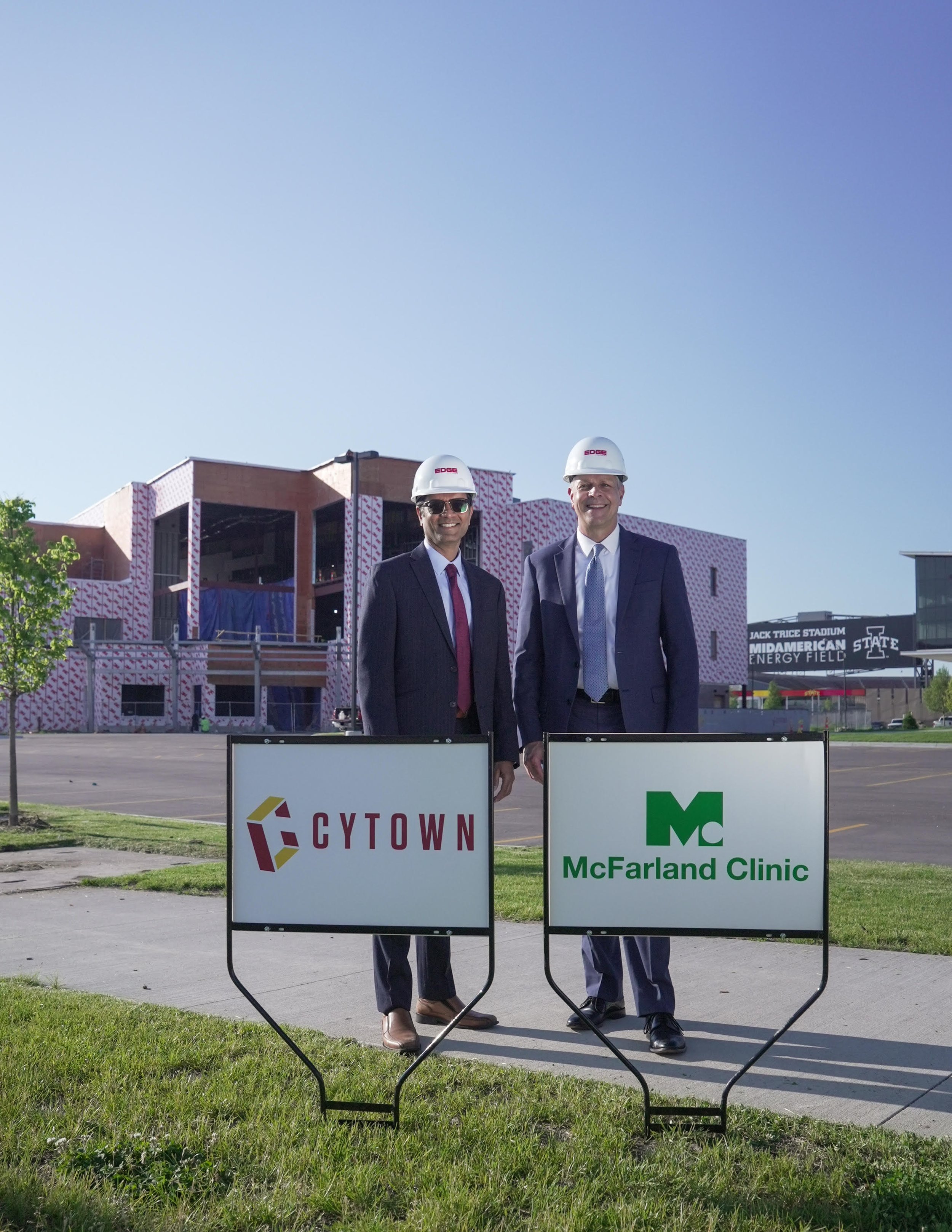
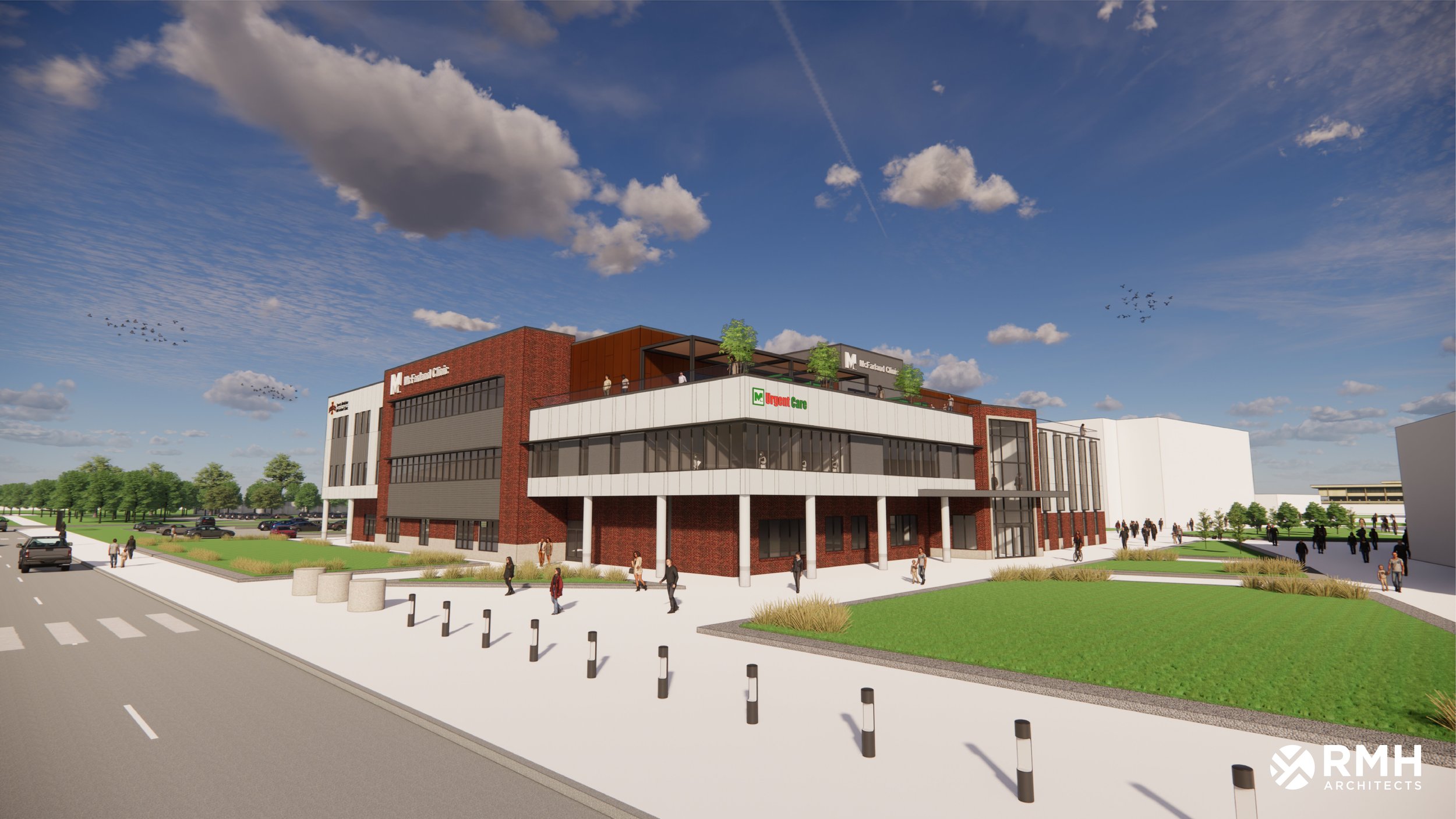
Directly across from Jack Trice Stadium on the campus of Iowa State University, McFarland's next chapter is already taking shape. A state-of-the-art 78,000-square-foot clinic will be the anchor building in the new CyTown development. It is set to open early next year.
Iowa State University is the area’s largest employer and brings 30,000 students to town. Perry says the CyTown location puts McFarland on campus, adding convenience for faculty and students while deepening an already strong connection with the university.
McFarland doctors are official team physicians of Iowa State Athletics and McFarland maintains a clinic in the Iowa State University Research Park. The CyTown location adds family medicine, pediatrics, orthopedic sports medicine, primary care sports medicine, occupational medicine, physical medicine and rehabilitation, physical therapy, urgent care, lab, and full imaging services including an MRI unit.
Dr. Shah says it is just another visible symbol of McFarland's longstanding relationship with Ames, a relationship that is stronger because of the organization's structure.
"When physicians are able to make decisions that are right for them and their patients, that, in turn, improves engagement, which improves the quality of care we deliver which, in turn, improves the total cost of that care. The engagement goes all the way from how they practice to how we improve the care of the community that we live in."