
Pediatric Neurosurgery and the Resilience of Children
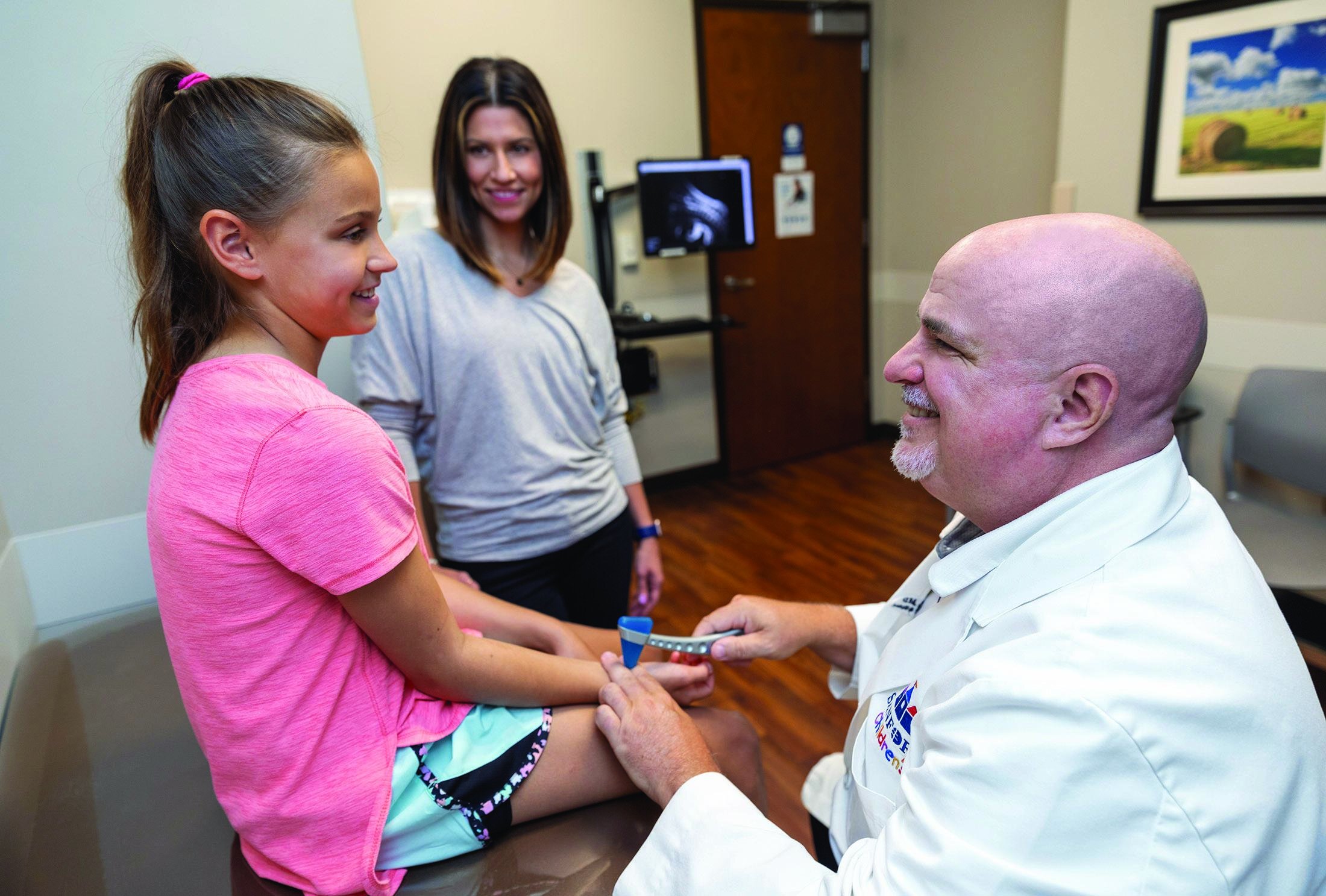
Dr. Eric Trumble & Dr. Shawn Vuong of Sanford Children's
By Alex Strauss
No parent wants to find themselves in Dr. Eric Trumble's office at Sanford Children's. And Trumble can certainly empathize. In addition to being one of only two pediatric neurosurgeons in South Dakota, he is also a father of seven.
"I do think being a father makes me more empathetic," says Dr. Trumble. "No one wants to think about their baby needing neurosurgery. But sometimes that is what is required and I am just glad to be able to provide care in South Dakota that was not available at this level in the past."
A graduate of the University of Virginia School of Medicine, Dr. Trumble completed his neurosurgery residency at the Medical College of Virginia in Richmond and went on to do a pediatric neurosurgery fellowship at UT Southwestern Medical Center in Dallas.
Along with pediatric neurosurgeon Shawn Vuong, MD, Trumble treats problems ranging from hydrocephalus, to epilepsy, cerebral palsy, spina bifida, complex brain tumors, and a host of other brain and spinal diseases and congenital abnormalities. Both doctors also treat adult patients.
"About fifty percent of all pediatric neurosurgery is done by adult neurosurgeons with an interest in pediatrics," says Dr. Trumble, who became the state's first board certified pediatric neurosurgeon when he joined Sanford in 2018. "Dr. Vuong and I have done an additional fellowship beyond our adult residency so we have more than an interest in pediatrics."
Why Pediatrics?
Shawn Vuong, MD, is a native of Hartford, South Dakota and a graduate of the USD Sanford School of Medicine. He did his neurosurgery training at the University of Cincinnati and completed his pediatric neurosurgery fellowship at Cincinnati Children's Hospital Medical Center, one of the country's top children's hospitals.
Vuong says he was drawn to pediatric neurosurgery not so much for its specificity as for its diversity.
"When I was looking at specialties, it seemed as though every adult specialty was trying to force you to do a smaller and smaller sliver of it," he says. "But in pediatric neurosurgery, we can treat traumas, vascular issues, spinal problems, tumors, peripheral nerves, and more. I felt like a pediatric fellowship was going to allow me to expand as a neurosurgeon."
As a parent himself to three young boys, Dr. Vuong says he also appreciates the positivity and resilience of children.
"I see adults sometimes get frustrated when they aren't feeling better as quickly as they think they should," says Dr. Vuong. "But, with kids, when they start feeling even a little bit better, you open the door to the exam room and they are ready to run out. Particularly with the nervous system, kids really bounce back. They have tremendous neuroplasticity."
As an example, he points to functional hemispherotomy, a delicate procedure to disconnect the brain's two hemispheres. It is sometimes necessary when a brain growth problem or a small stroke at or right after birth causes a child to have constant seizures.
"In an adult, functional hemispherotomy would lead to paralysis on one side," says Dr. Vuong. But children who undergo functional hemispherotomy before age two experience no paralysis and tend to recover well. Likewise, Vuong says children can also bounce back from serious traumas such as a large brain bleed, whereas adults rarely do. But resilience is not the only thing Vuong and Trumble love about pediatric patients.
"One of the reasons I got into pediatric neurosurgery is because brain tumors are the most common solid tumor in kids and we can cure about 80 percent of them with surgery," says Dr. Trumble. That's largely because the slow-growing Grade 1 JPA (juvenile pilocytic astrocytoma) is the most common childhood brain tumor. In contrast, the most common adult brain tumors are aggressive and hard-to-treat glioblastomas.
"Many kids with brain tumors can be cured with chemotherapy or radiation," says Trumble. "Then we follow them for MRIs for years."
Why Sanford?
Prior to joining Sanford in 2018, Dr. Trumble spent 21 years in Orlando, Florida. Although he says it was hard to leave patients he had watched grow up, with his own kids out of high school, the timing seemed right for the Minnesota native to come back to the Northern Plains. Trumble says Sanford's commitment to pediatric excellence was a big draw.
"At Sanford, we have a broad spectrum of pediatric subspecialists so there is always someone available to me to talk about a clinic [i.e., the spina bifida clinic]," says Dr. Trumble. "At the same time, from a surgeon's standpoint, the ORs are connected. So whether I'm operating on a 3-year-old or an 83-year-old, I'm working with the same team."
"I knew from the beginning that I wanted to treat both adults and children," says Dr. Vuong, who joined Sanford in 2019. "I ultimately chose Sanford because I felt like the administration had my back on that."
Since then, Dr. Vuong has encountered a number of rare and challenging pediatric cases, including a toddler with a brain stem lesion triggered by an infection and a young teen who slipped into a coma after the family stopped following up on the shunt he received as an infant. Both kids are now doing well and Drs. Vuong and Trumble say they are upbeat about the future of Sanford's program, its patients, and the neurosurgery profession.
"I've always been interested in the great frontier," says Dr. Trumble, who once hoped to be an astronaut. "To me, the brain is still a big black box. We use our entire brain, but we only understand about ten percent of what it does. The most plastic time of our brain is while it's still being formed. In neurosurgery, we still have so much to learn."
Adult and Pediatric Neurosurgical Procedures Offered and Neurological Conditions Treated at Sanford:
Adult hydrocephalus
Arteriovenous malformations
Astrocytoma
Brain tumors
Burst fractures
Carpal tunnel
Compression fractures
Cerebral palsy
Craniofacial anomalies
Craniosynostosis
Cavernous malformations (cavernomas)
Cerebral abscess
Chiari malformation
Dandy-Walker malformation
Degenerative spine disease
Encephalocele
Ependymoma and subependymoma
Epidermoid or dermoid tumors
Epidural hematoma
Epilepsy surgery
Glioblastoma multiforme
Glioma
Hypothalamic gliomas
Hydrocephalus
Insular gliomas
Intracranial aneurysms
Intraventricular tumors
Intracranial vascular malformations
Intrathecal pump implants
Low-grade gliomas
Meningioma
Metastatic lesions
Moyamoya disease
Myelomeningocele (a type of spina bifida)
Neurocytoma
Neurofibromatosis
Normal pressure hydrocephalus
Oligodendroglioma
Optic pathway gliomas
Other rare brain tumors
Pineal region tumors
Pituitary adenoma
Pseudotumor cerebri or idiopathic intracranial hypertension
Pediatric aneurysms
Pediatric arteriovenous malformations
Pediatric brain tumors
Pediatric Chiari malformation
Radiosurgery
Resistant pediatric epilepsy
Scoliosis
Spina bifida
Spinal cord lipoma
Syrinx
Subarachnoid hematoma
Subdural empyema
Subdural hematoma
Tethered cord
Traumatic brain injury
Trigeminal neuralgia
Vestibular schwannoma (acoustic neuroma)
Vein of Galen malformations
Vertebral spine fractures