
Columbus Community Hospital Highlights F.A.S.T. Stroke Warning Signs and Symptoms
Columbus Community Hospital is reinforcing its commitment to rapid, high‑quality stroke care by reminding the community how critical it is to recognize stroke symptoms. When a stroke occurs, the brain loses oxygen every second, and fast action can significantly improve long‑term outcomes.
CCH provides comprehensive stroke services through its emergency department, offering 24/7 access to advanced imaging, laboratory services, respiratory therapy and coordinated care from a multidisciplinary team. The hospital also partners with Nebraska Medicine neurologists through its telestroke program, ensuring patients receive expert evaluation and treatment without delay.
Public awareness is the best way to combat the effects of stroke, said Dr. Mark Howerter, chief medical officer at CCH.
“At the hospital, we have all the sophisticated equipment required to perform state‑of‑the‑art scans, provide instant access to highly qualified neurologists and deliver high‑quality treatments. All of that is negated if we cannot see and treat the affected individuals within the preferred three‑hour window after symptoms occur.”
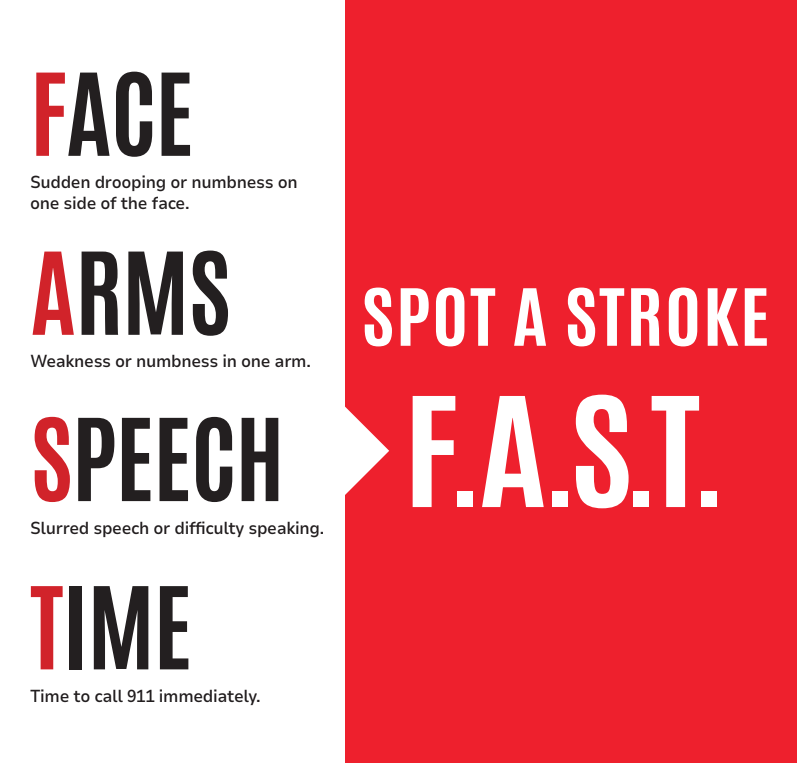
You can save a life by recognizing a stroke quickly. We encourage community members to learn and remember the F.A.S.T. method:
Face drooping — Look for unevenness, numbness or drooping on one side.
Arm weakness — Ask the person to raise both arms. One may drift downward.
Speech difficulty — Listen for slurred, slow or hard‑to‑understand speech.
Time — If any of these signs appear, call 911 immediately.
“The public’s ability to understand how a simple acronym like FAST works — and the significance of early consideration of stroke by lay people — is what makes the difference in how successfully we can limit disability,” Howerter added.
You should never ignore even brief or temporary symptoms. Reduced blood flow to the brain can affect movement, speech, vision and cognition, and rapid treatment within the first few hours offers the best chance for recovery.
CCH also supports patients beyond the emergency phase through rehabilitation services, stroke support groups and ongoing education. Additionally, the hospital helps individuals reduce risk factors such as high blood pressure, diabetes, inactivity and tobacco use.
For more information about stroke care at Columbus Community Hospital, visit https://www.columbushosp.org/services/emergency-department-and-trauma-services/stroke-care