
The Missing Ingredient — Avera Tackles Food Insecurity at the Point of Care
By Alex Strauss

(L to R) Bobbie Ramm – volunteer, Al Arndt – volunteer, Laura Nostvick – social worker, Avera Research Institute, Lydia Slattery – Communications and Public Relations Specialist, Avera
The routine screening question seems simple enough: "Do you have concerns about your next meal?"
But for Avera Health, the answers have been eye-opening. A now-standard screening for social determinants of health has revealed a sobering reality about food insecurity in South Dakota communities—and sparked an innovative response that's changing how patients receive both medical care and nutritional support.
"Over the last several years as we've started doing more screening for social determinants of health, it's become apparent that we were underestimating the food insecurity in our population," says David Basel, MD, Avera's population health officer and a primary care doctor in Harrisburg.
According to recent data, one in nine children and one in 12 South Dakota adults is sometimes unsure of where their next meal will come from. For healthcare providers trying to help patients manage chronic conditions or support healthy development, these statistics represent a fundamental challenge to effective care.
"From a purely medical standpoint, some of the chronic conditions we are most concerned about like diabetes, obesity, and hypertension that lead to morbidity and mortality, are tied to nutrition," says Dr. Basel.

David Basel, MD
Meeting Patients Where They Are
Avera's answer to the challenge has been to establish a simple clinic-based program for food distribution. The idea is to offer food to patients who need it right where they get their healthcare, in the hospital or clinic. No waiting. No travelling. No awkward visit to the community food bank. Just a bag (or bags, depending on household size) of healthy food and information about other food resources in their community.
"We are asking patients to make healthy choices. But it's really hard to meet those goals when you don't have access to healthy food," says Lindsay Weber, President and CEO of Avera St. Benedict Health Center in Parkston, one of the two pilot sites for the program. "We felt it was our responsibility to help people with this."
While they are important, traditional food banks aren't always able to bridge the gap between identifying need and providing immediate assistance.

Lindsay Weber
"People can have problems accessing the local food pantry or food truck because they don't have time, don't know where it is or when it's open, or they lack transportation," says Dr. Basel. There's also the matter of dignity: "People notice who pulls up outside the community food bank," he says. "There can be a little bit of stigma to that."
A recent Health Start grant focused on social determinants of health is helping to fund the program, which is administered in collaboration with Feeding South Dakota, Avera Research Institute, and Avera’s Community Partnerships program.
Tailored Solutions for Different Communities
The two pilot locations for the clinic-based food pantry program have taken slightly different approaches to the same goal. In Sioux Falls, the focus is on pediatric and obstetric patients at Plaza 1 on the Avera McKennan campus who are screened by care teams for food insecurity as part of routine care.
In the rural community of Parkston, all food-insecure patients are eligible for the bags, regardless of whether they visited the clinic, stayed in the hospital, or visited the emergency room.
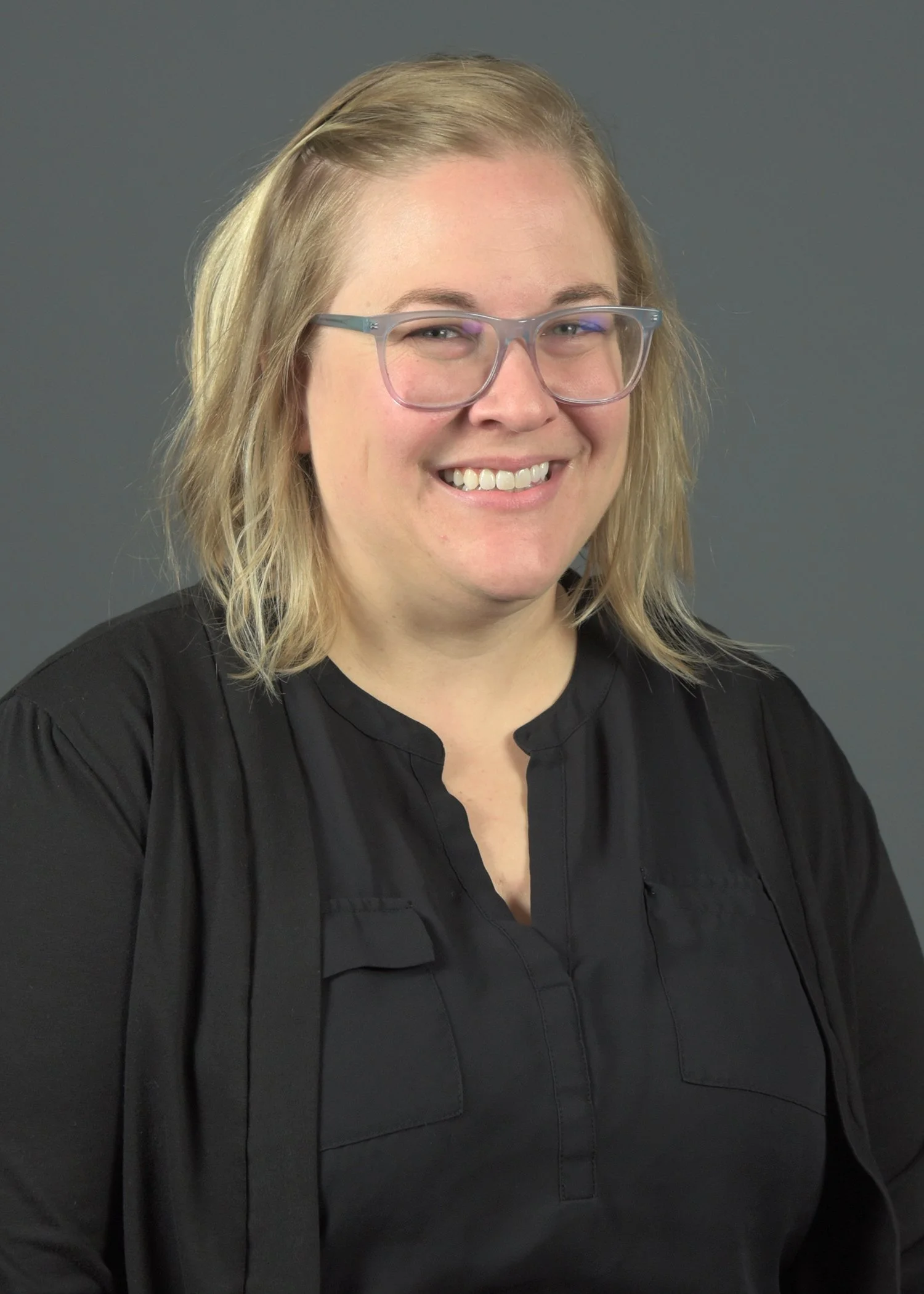
Lacey McCormack
Patients who need it are offered an emergency supply of food from the wellness pantry, based on their household size. They are also referred to food pantry options in their community for ongoing support. The whole exchange is designed to be simple and efficient.
"We decided, based on the volume of patients we expected to see, that we should get shelf-stable food only," says Lacey McCormack, PhD, MPH, RD, Director of Rural Research at Avera Research Institute, and one of the leads on the project. Each bag contains about 15 pounds of food from all food groups, including shelf-stable milk and canned proteins.
When each week's order of food arrives from Feeding South Dakota, community volunteers and Avera staff help with the unboxing and packing process, creating pre-assembled bags that clinic staff can distribute immediately when need is identified. "We don't have our patients shopping around and we don't have our clinic staff packing bags for patients on demand," says McCormack.
Since launching in January, the Sioux Falls location has distributed more than 300 bags. Parkston, which began in November, has provided more than 50 bags, each supplemented with a $15 voucher for fresh produce, redeemable at the local grocery store.
Removing Barriers to Care
The clinic-based model leverages a crucial advantage in healthcare delivery, particularly in rural communities. "The hospital or clinic is an anchor destination for people in rural areas," says Dr. Basel. "They figure out how to get to the clinic and then they don't also have to figure out how to get elsewhere to get food right away."
The approach also reduces stigma while building on existing trust relationships. "A lot of people have noticed that if you have a pantry attached to a clinic, there is a lot less stigma," says Basel. "You're going there for your appointment anyway and you are just able to walk away with some food."
Lindsay Weber says the trust between patients and their providers creates space for sensitive conversations about food insecurity that might not occur elsewhere, allowing patients to feel seen and supported.
Expanding the Model
The program's early success has generated significant interest across the Avera system. "We have a list of clinic locations that have already reached out and said 'We want to be next!'" says Dr. Basel.
Avera plans to add two additional clinics in the current fiscal year, with more planned for the future, creating a win for both patients and staff.
"Patients, of course, are grateful, but what we have heard from staff is that they are also excited to be able to hand something out to people after asking the question," says McCormack. "It is frustrating to find out about food insecurity and then not have anything to give them.This program really supports Avera's mission."
Want to get involved?
CLICK HERE to donate to the Avera Foundation and indicate that you wish your donation to support Avera’s Clinic-Based Food Pantry program
OR
CLICK HERE to donate to Feeding South Dakota