
School-Based Behavioral Health Services Reach 33,400 Iowa Students
Behavioral health care that once required hours of travel is now available inside schools for thousands of Iowa students.
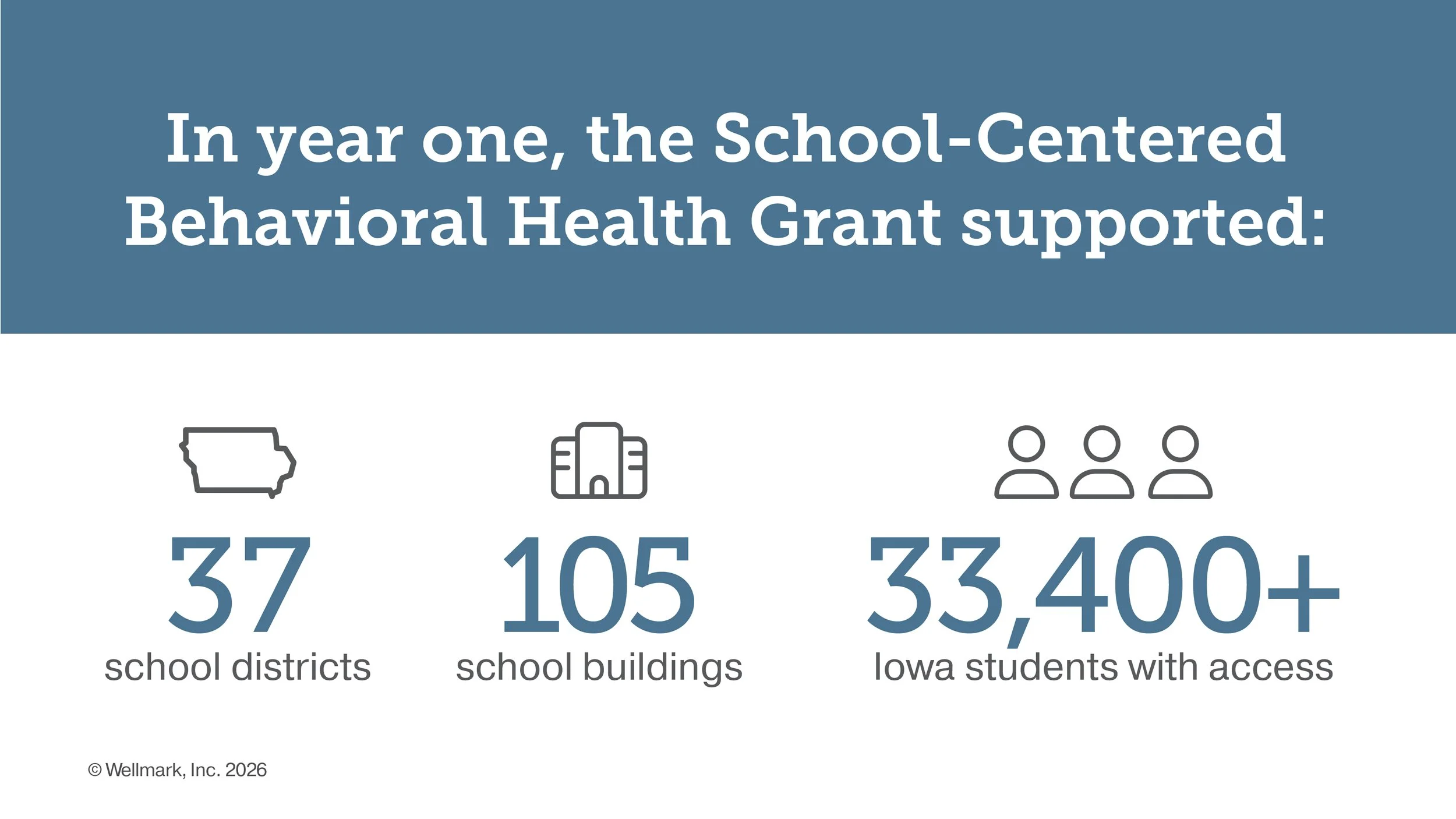
In its first year, The Wellmark Foundation School-Centered Behavioral Health Grant Program helped support behavioral health services in 105 school buildings across 37 rural districts, serving more than 33,400 students statewide.
The program began as behavioral health needs continue to rise in the United States. Today, 1 in 5 adolescents lives with a behavioral health diagnosis (Sappenfield et al., 2024). In rural Iowa, care often means long travel and time away from school for students and work for their parents and caregivers. These barriers can keep families from the support they need.
"The earlier we can get students connected with the support they need, the greater the opportunity for them to thrive, both at school and in life," said Laura Jackson, executive vice president of health improvement for Wellmark Blue Cross and Blue Shield and chair of The Wellmark Foundation. "Schools are often the heart of our rural communities and a trusted place for students and families to turn. For many young people facing behavioral health challenges, timely support can make a lasting difference in their well-being and future success. By bringing services closer to where students learn and grow every day, we can remove barriers to care, strengthen families and build healthier, more resilient communities."
Why it matters
Research shows that 50 percent of lifetime mental illnesses begin by age 14, and 75 percent begin by 24 (NAMI Northern Virginia, n.d.). Access to services early can change lives, helping students overcome challenges before they become larger barriers to learning and well-being.
Participating districts are already reporting positive results.
In Sioux Center, grant funding helped the district add its first school psychologist, greatly expanding its capacity to provide school-based behavioral health support.
"Whether you're a 6-year-old or whether you're 18 years old, it's hard being a kid today," said Gary McEldowney, superintendent of Sioux Center Community School District.
In Leon, at Central Decatur Community Schools, students can move from identification of a concern to a behavioral health appointment in as little as two weeks through school-based telehealth services. Before the program, families could wait up to six months for care.
"We know that kids who get therapy early on and develop skills, coping skills, self-regulation skills, whatever it might be, they do better long term," said Amy Whittington, PK-6 principal at Central Decatur Community School District. "Ultimately, our whole community benefits."
In Denison, licensed therapists now provide services directly in school buildings, creating easier access to care during the school day. Teachers and staff report improvements in student behavior, academic performance and school culture.
"When a parent says, 'I got my little boy back,' when their child is smiling again, that's pretty powerful," said Kim Buryanek, superintendent of Denison Community School District.
Statewide reach
The grant program gives rural Iowa schools the flexibility to address behavioral health needs in ways that make sense for their students. The success of these efforts reflects a broader commitment to healthier communities across Iowa, a goal shared by The Wellmark Foundation and Wellmark Blue Cross and Blue Shield.
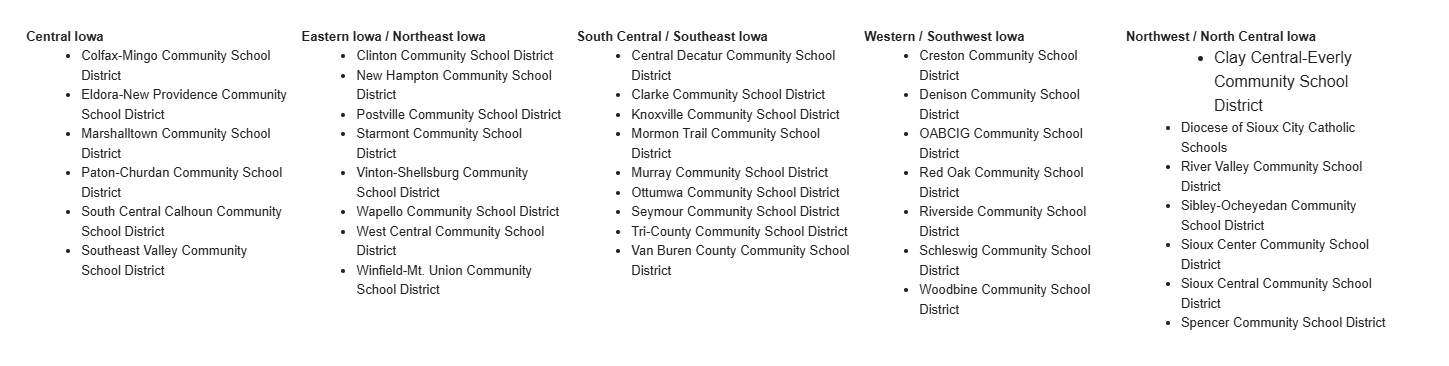
School districts receiving School-Centered Behavioral Health Grant funding
For more on this program, read the full story on Wellmark.com: Behavioral health care is making an impact in rural Iowa.
Video about the program is available: Helping Iowa youth thrive: The first year of school-centered behavioral health grants