
[Sponsored] Sanford Health’s Hybrid Clinical Trial Program Gives Local Cancer Patients More Options
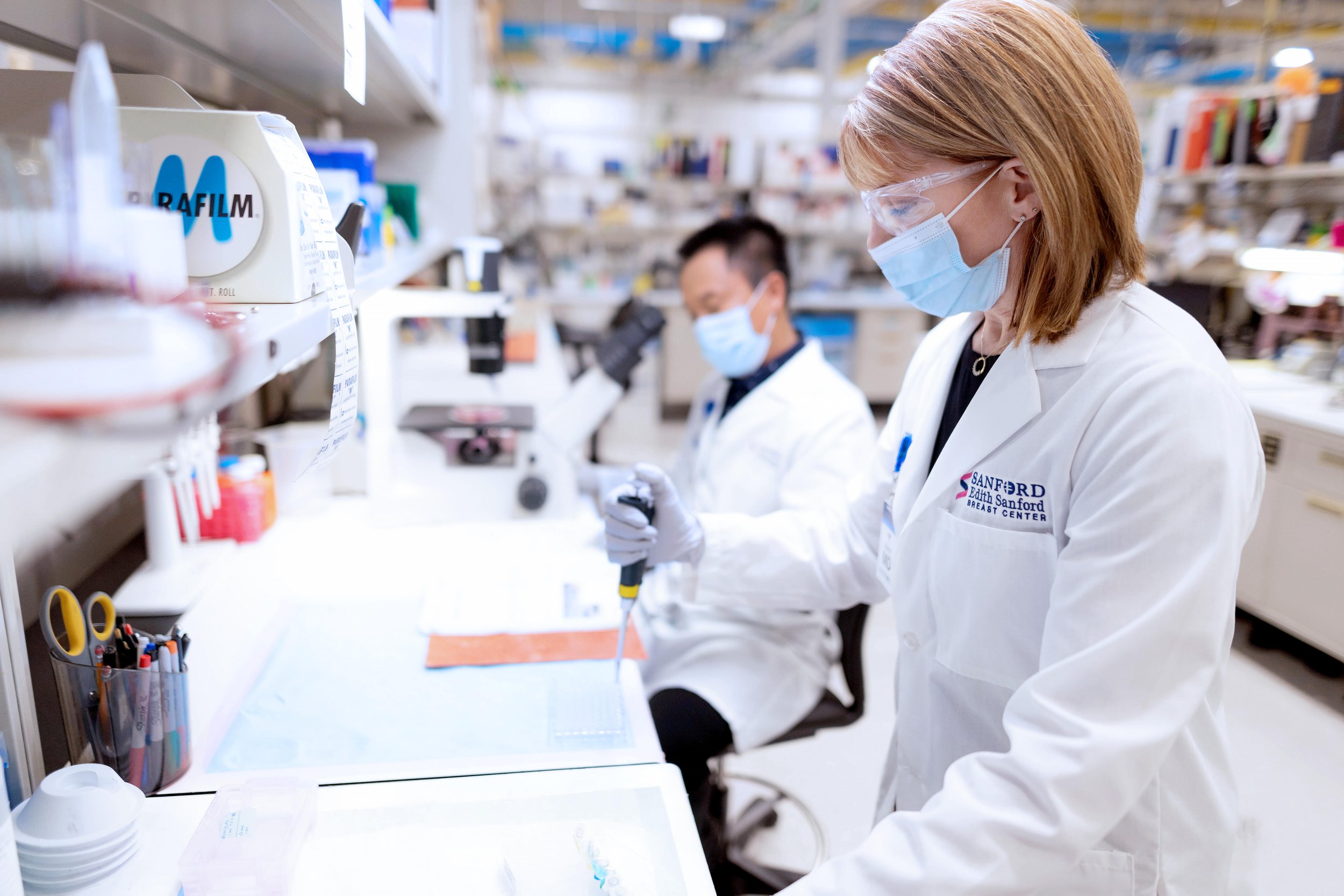
Headquartered in Sioux Falls, South Dakota, Sanford Research is a premier biomedical research institute that works to innovate healthcare in the Midwest and beyond through scientific discovery.
With a team of over 250 researchers, Sanford Research supports bench, translational and clinical research across eight broad fields of study, including behavioral science, cancer biology and immunotherapies, pediatrics and rare diseases and more.
Sanford Research is currently involved in over 300 clinical trials that aim to improve the treatment, prevention, detection or survivorship of a wide range of diseases, from diabetes, cystic fibrosis and COVID-19 to eating disorders and cancers.
Cancer is often the center of attention due to its immense impact on the American public. Through its NIH-funded Cancer Biology Research Center of Biomedical Research Excellence (CoBRE), Sanford Research is identifying the biological mechanisms that cause cancer, studying the role of the immune system in fighting cancer and investigating new treatments through a robust clinical trial program.
A hybrid model
Sanford Research is a community-based clinical research program. As an integrated healthcare system that spans 250,000 square miles, patients are treated in their communities, or close to home, rather than at an academic center.
Often, community-based programs only offer access to clinical trials later in development, while larger academic research centers offer studies in early phases of development.
Lora Black, executive director of clinical research at Sanford Research, said Sanford Health is unique in its ability to offer phase 1 clinical trials to cancer patients in its own community centers.
“It’s rare for a community-based site to offer early-phase trials,” Black said. “Usually, community-based sites are looking at the phase 3 trials, or maybe some phase 2s.”
“We’re at the point where we’re conducting phase 1s, which means we’re bringing cutting-edge options to patients here at home. Having a broader portfolio makes us more of a hybrid site because we’re able to open trials across many levels of development.”
Steven Powell, MD, a medical oncologist and researcher at Sanford Health, currently oversees more than 10 clinical trials investigating novel cancer drugs. As a clinician-scientist, Dr. Powell works to get new treatments—especially targeted therapies and immunotherapies—from bench to bedside.
He and his colleagues have studied exciting innovations like immune checkpoint inhibitors, oncolytic viruses, cytokine therapies, antibody-drug conjugates and even cell-based therapies for cancer treatment.
Dr. Powell believes Sanford Research has built a strong clinical trial program and reputation with its hybrid model.
“When you look at cancer therapy, people often think of the big centers,” Dr. Powell said. “Those centers though are probably only treating 5 to 10% of the patients that actually get diagnosed with cancer, and people are traveling long distances to get their care.”
“At our center, we’re doing cancer research where it needs to happen and treating people where they live. This is the real population, and we’re learning how these treatments work in that population. I think that’s where we’ve shown our strength.”
He went on: “We have a lot of options that rival what is available at some of the major research centers in the country. We’re starting to see patients coming from outside of Sanford for our clinical trials.”
Clinical trials close to home
Sanford Research offers cancer clinical trials at six primary performance sites: Sioux Falls, SD; Fargo, ND; Bismarck, ND; Bemidji, MN; Worthington, MN; and Thief River Falls, MN. The sites collaborate to advance cancer research and care across the Midwest.
“We treat cancer as an enterprise-wide effort. All our sites work together,” Dr. Powell said. “We get clinical trials sent to us from all over the world. We review them and pick the trials that we think are best for patients in our communities.”
Giving patients access to early-phase clinical trials close to home can be a game-changer for their treatment. Travel is one of the biggest barriers to receiving the cutting-edge, investigational treatment options that, until recently, were only available at academic research centers in highly populated areas.
Sherra vanDonkersgoed, a Sanford Health nurse navigator who helps connect cancer patients to early-phase clinical trials in Sioux Falls, emphasized the importance of keeping patients close to home
“With cancer care, your support group is so important,” vanDonkersgoed said. “When you have to move from your support group to get your care, that’s not healthy for anybody involved. If we can keep the care here at home, at a high level, that’s really best for the patient.”
Oncology nurse navigators like vanDonkersgoed play a key role in Sanford Health’s team approach to cancer care. They make the treatment process more efficient and effective by helping patients overcome the obstacles that might keep them from getting better, including treatment side effects, financial barriers and health illiteracy.
When cancer patients must travel to access clinical trials at Sanford Health, vanDonkersgoed helps make the process as painless as possible.
“We contract with all our studies to assist patients with expenses for travel, lodging and meals,” she said. “We even hold trials that will offer reimbursement for flights if needed.”
In her navigator role, vanDonkersgoed also fields inquiries from providers outside of Sanford Health wanting to refer patients.
“I can talk with them about options for their patient, whether it’s a drug in the early phases of clinical trials, a treatment in a later phase or even just a second opinion,” she said.
But that’s not the only way Sanford Research identifies and obtains patients for trials, according to Black.
“We’re able to work with physicians to screen patients through their schedules and identify opportunities to discuss options at the patient’s appointment,” she said. “At times, we’re able to embed a clinical research coordinator at the clinic so that they can work alongside physicians and patients.”
Providers can learn more about Sanford Research’s cancer clinical trial program, including current options for patients, by visiting research.sanfordhealth.org or calling (605) 328-1368.