
How North Dakota Built a Medical Cache the Nation Is Watching
By Alex Strauss
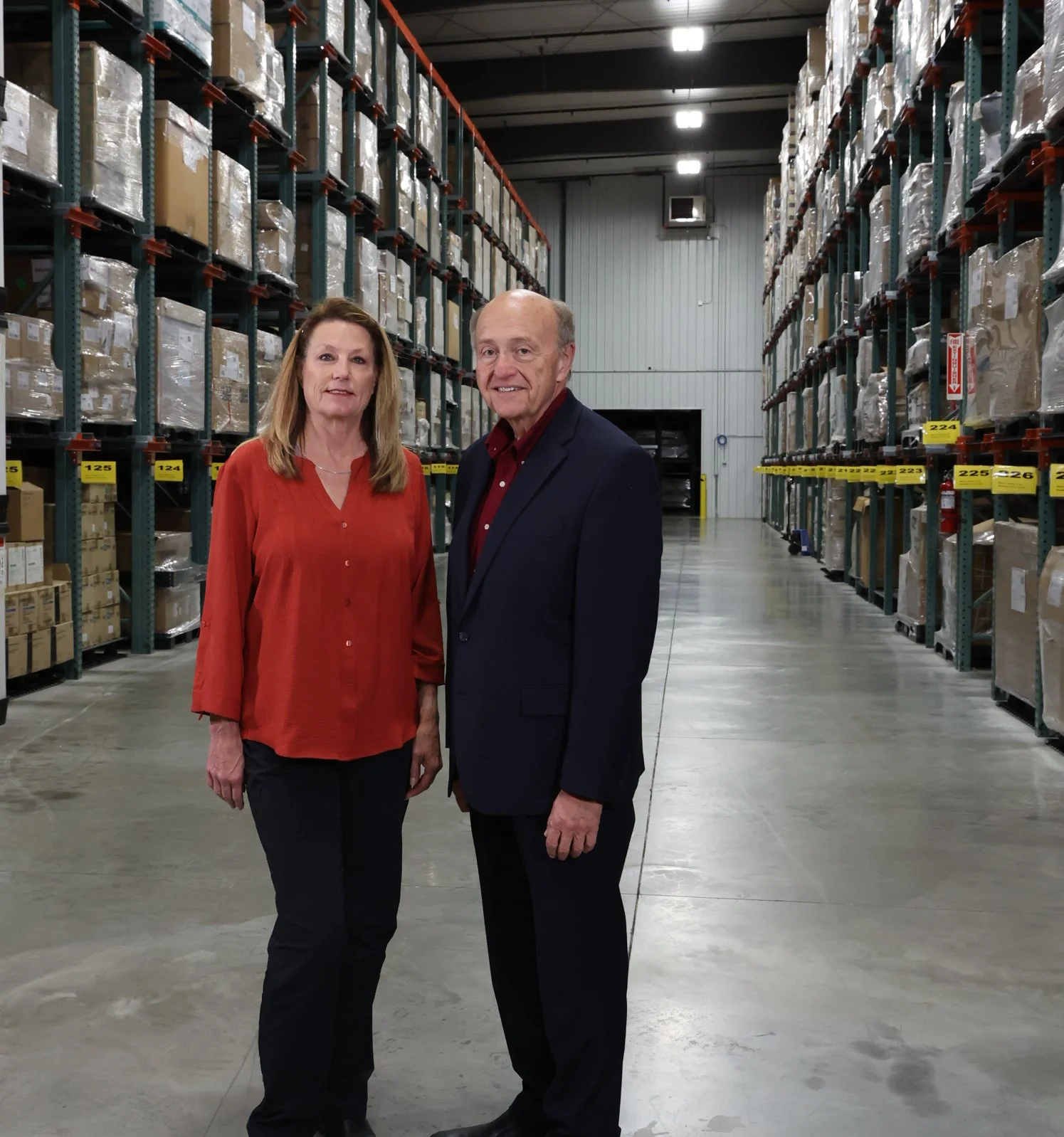
Juli Sickler and Tim Wiedrich of the North Dakota Department of Health and Human Services
Long before the general public even knew words like “PPE” and “N95”, North Dakota and its healthcare partners were quietly amassing a huge stockpile of emergency medical supplies. Largely invisible, even to North Dakota healthcare professionals, the state's impressive medical cache means hospitals here are truly ready for just about anything - from floods, fires, and blizzards to protests and terrorist attacks.
"Even though North Dakota is unlikely to ever be a terrorist target, we'll feel the effects if there is an attack elsewhere in the country," says Tim Wiedrich, Section Chief of Health Resources and Response at the North Dakota Department of Health and Human Services (ND HHS)."You can be prepared in a lot of ways, but if you don't have the stuff you need when you need it, you are not going to be able to respond effectively."
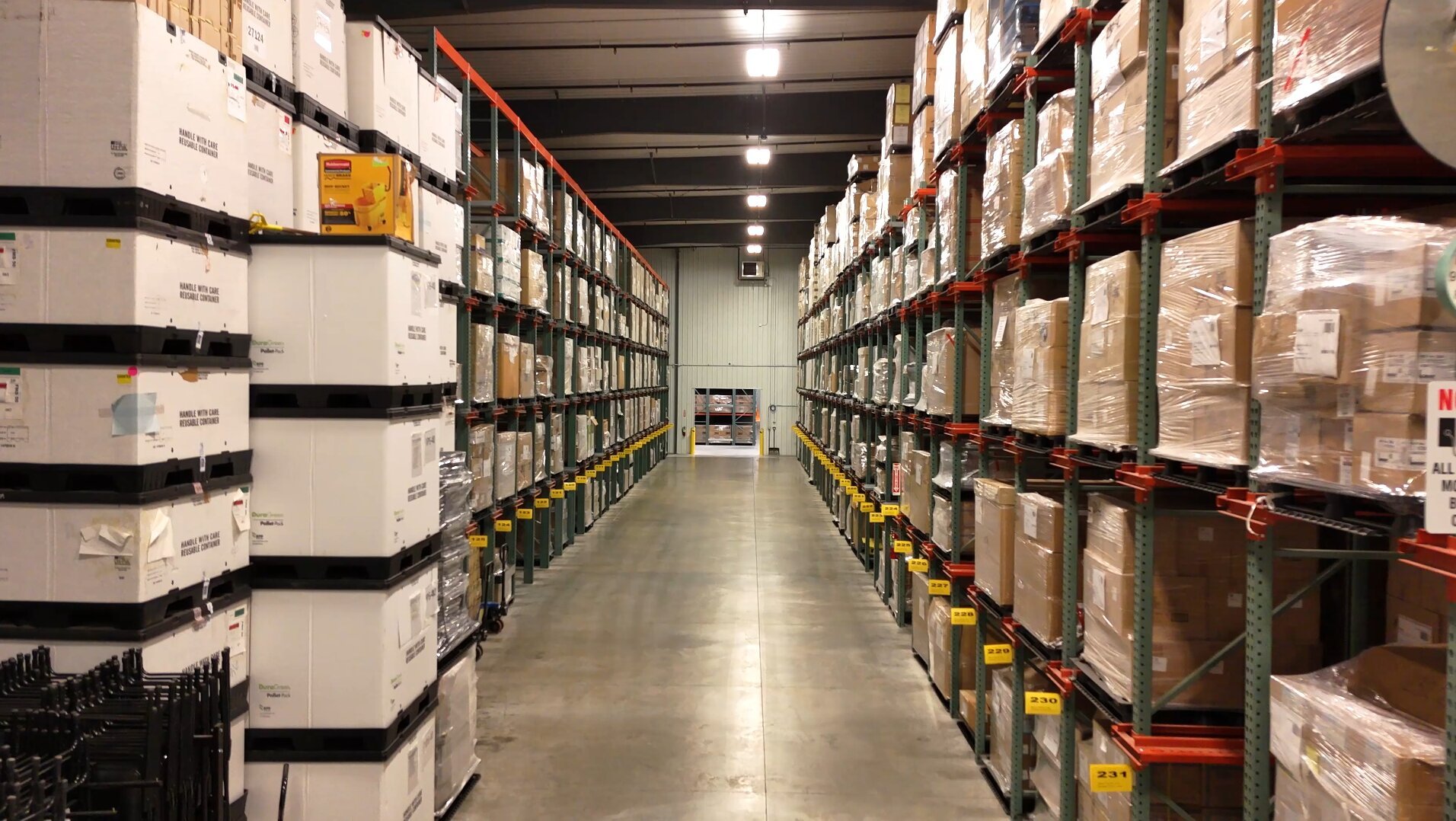
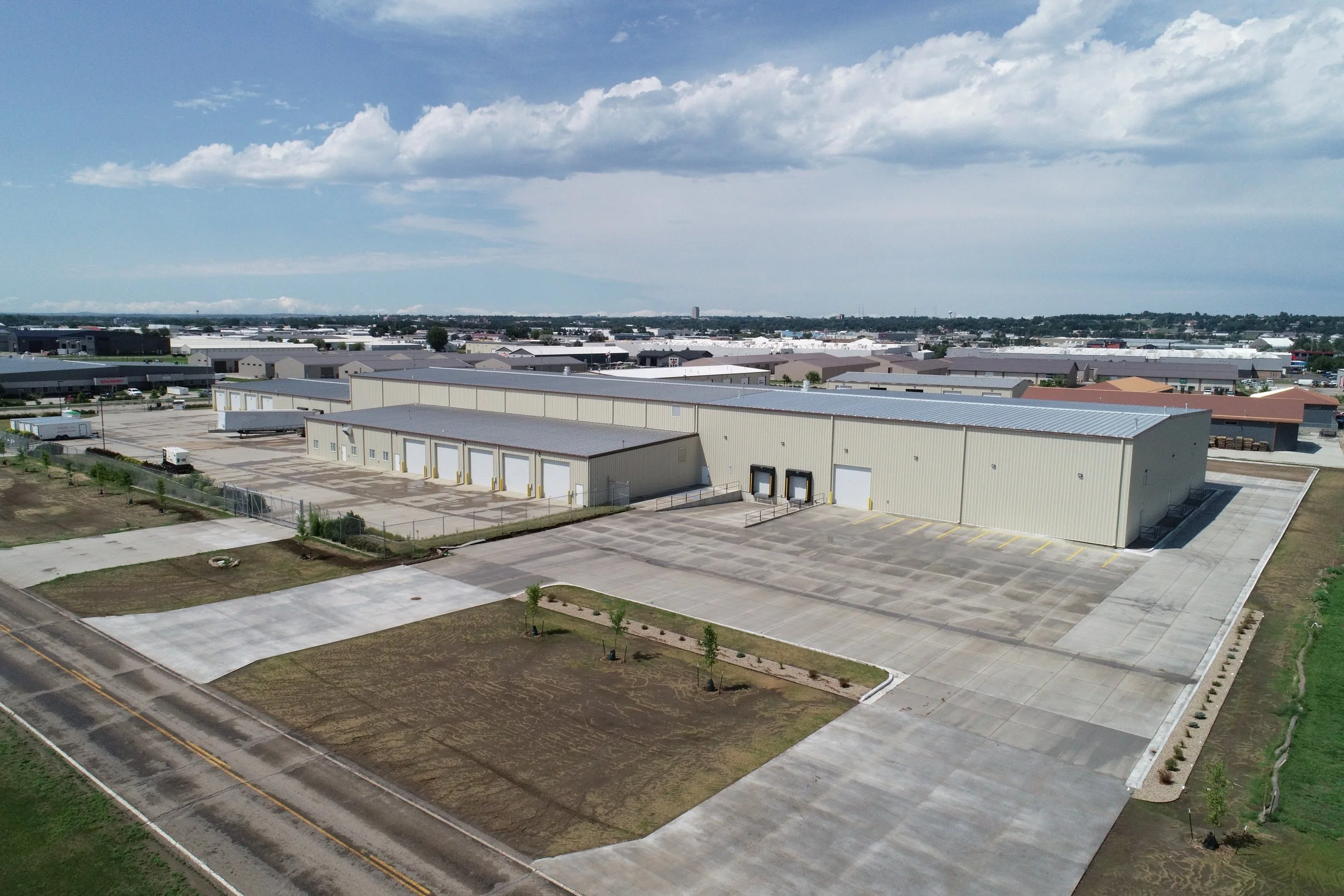
Thanks largely to Wiedrich and his team, North Dakota now has plenty of "stuff". A collection that began more than two decades ago in a single-stall garage now fills 80,000 square feet, most of it in Bismarck. Today, the cache holds about 900 unique items worth roughly $32 million, stored in more than 4,000 pallet positions. In September, this enormous project was even held up by the national Administration for Strategic Preparedness and Response (ASPR) as a model for its new nationwide Jurisdictional Stockpile Program.
One State, One System
Wiedrich has been with North Dakota's Health and Human Services Department for 40 years. He had been the state's EMS director for 16 years even before the September 11 attacks revealed how unprepared the nation's medical systems were for an event of that scale.
"I came from a strong background in terms of needing to have systems," says Wiedrich, a former president of the Association of State and Territorial Health Officials. "So, when the state health officer came and tapped me on the shoulder and said, 'We have some issues here, and we know there is some money coming because of September 11th', I already had a lot of relationships that would prove really helpful."
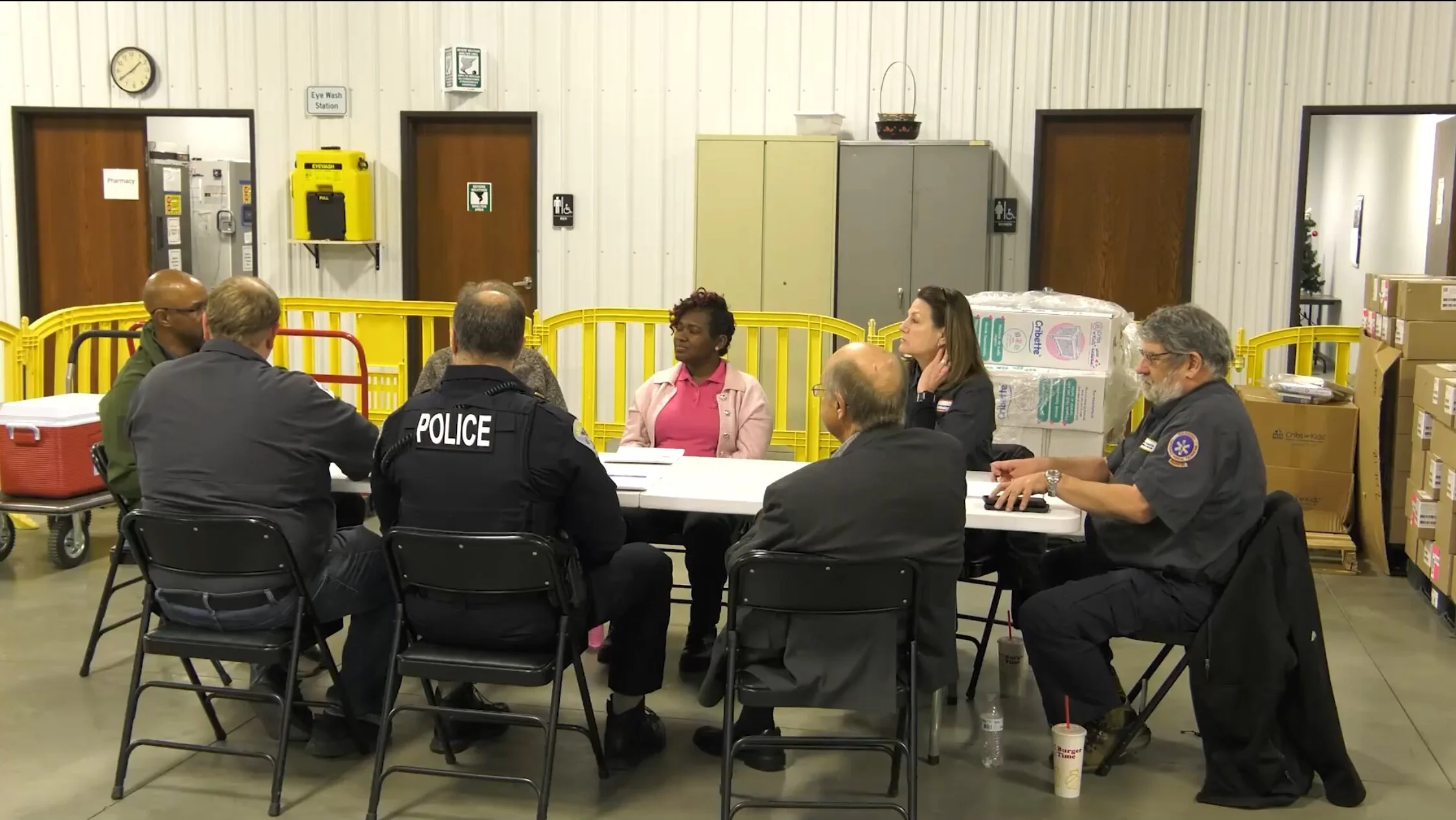
Before the first grant dollars arrived, Wiedrich and his colleagues gathered about 100 stakeholders from EMS, hospitals, long-term care, and public health. In a state this rural, they agreed, the answer had to be one statewide system.
"What sets us apart is that ours is a public-private partnership," says Wiedrich. "That gives us huge advantages, such as a much better sounding board in terms of what the private sector is needing. It allows us to expand our vision for what we may need for future emergencies."
That system rests on three pillars: a uniform statewide response process, regardless of the size or location of the facility, a trained statewide Medical Reserve Corps, and the cache itself.
"There are 1,600 people who raised their hand and said, in a large-scale emergency, send me," says Wiedrich. More than 400 are ready to go right away.
More Than Masks and Gloves
Juli Sickler, director of the Emergency Preparedness and Response Unit at NDHHS, oversees the cache's day-to-day operations.
"We started with PPE, gowns, gloves, and masks. But we very quickly saw that there were other things our facilities needed such as heating during cold winter months or cooling in the summer," says Sickler. "Rather than having to evacuate people, we invested in trailer-mounted heaters and coolers, and generators of various sizes."
Today the inventory also includes, among other things, ventilators, oxygen, defibrillators, snow removal equipment, a mobile medical unit, surgical beds, a fleet of about 30 vehicles, 40 trailers, and patient transport capacity for about 2,000 people.
Each major event has prompted the addition of something new. During the Dakota Access Pipeline protests in 2016 and 2017, for instance, the team realized it also needed what Sickler calls 'wraparound services' such as beds, bedding, ovens, and warmers.
"We served over 50,000 meals to our people and to law enforcement during that event," she says. "We have learned that if we need something at the time of an incident, we likely won't get it. So we try to be proactive and put it in the medical cache ahead of time."
Not Just for Emergencies
The cache isn't reserved for disasters. Hospitals, local public health units, long-term care facilities, and other partners can order any time through an online storefront that Sickler compares to shopping on Amazon. Requests are monitored around the clock every day of the year.
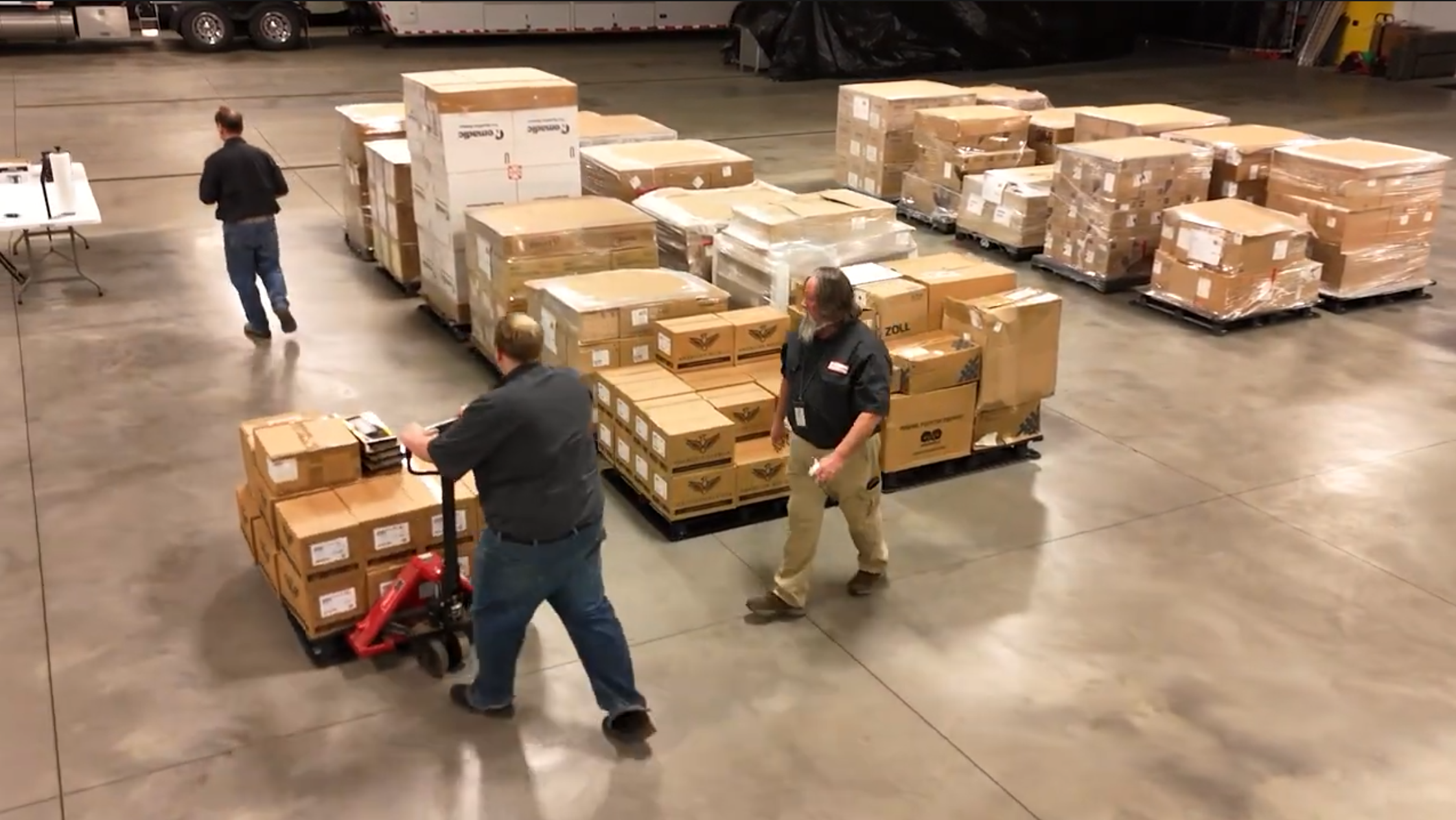
"These things are available to our facilities on a daily basis," says Sickler. "If they are waiting for a shipment from their vendor, for instance, we can say, 'Here you go, take what you need out of the medical cache.'"
There is no upfront cost to facilities, which are simply asked to replace what they use so the shelves stay stocked for the next request.
For Tim Blasl, president of the North Dakota Hospital Association, the payoff was clearest during the pandemic. While other states suffered supply shortages, North Dakota was well stocked.
"Our hospitals needed gowns, gloves, and masks. Tim was able to just say, 'what do you need?' and put it on a pallet" says Blasl. "All our hospitals, urban and rural, benefited from having access to this."
People Are Paying Attention
Wiedrich estimates that only a handful of states have systems as mature as North Dakota's. That may be changing. In 2025, ASPR launched its Jurisdictional Stockpile Program to help states build reserves of their own.
"We have had a lot of federal officials and other states come in to learn from what we've done here," says Wiedrich. "We're really proud of what we've built and people are paying attention."
For healthcare professionals elsewhere in the region, his advice is to get involved in their own state's system now.
"Every state has a program like this. What needs to occur is to find mechanisms to collaborate so that it becomes an actual system," he says.
More than two decades after that initial tap on Wiedrich's shoulder, North Dakota's hospitals now know exactly where to turn when they are in need.
"You don't want these events to happen, but when they do, we have a plan and we have the supplies," says Blasl. "For hospitals, that's a great comfort."
Click Here to Watch ASPR's video tour of the North Dakota State Medical Cache