At Home in Huron, South Dakota: How HRMC is Cultivating a Diverse Workforce
[MED MAGAZINE EXCLUSIVE]
By Alex Strauss

Paw Sa, community liaison, Sau-Mei Ramos, community liaison, and Yendy Castillo, Foundation and marketing assistant
Huron has been one of the most culturally and ethnically diverse communities in South Dakota for nearly two decades. According to the latest US Census data, about 14 percent of the community is either Hispanic or Southeast Asian - twice as high as the state average. Erick Larson, CEO of Huron Regional Medical Center, says the community owes much of its diversity to two businesses - the Jack Links Beef Jerky plant in Alpena which opened in 1999 and the Dakota Provisions turkey processing plant which opened in 2005.
The plants brought in workers from places like Puerto Rico, Brazil, the Dominican Republic, Vietnam, El Salvador, India, Nepal, and Guatemala as well as many Karen people, an ethnic group from Myanmar. Today, 25 years after the first plant opened, a second generation is entering the workforce and HRMC is positioning itself to welcome them.
"We are trying to structure our organization to mirror and match our community," says Larson. Larson says the fact that many immigrant children who have grown up in Huron are now uniquely positioned to help bridge the gap between their first generation families and the Western healthcare system.
"It's also about workforce development," says Larson, who is not focusing solely on the younger generation. "We have people in our communities who are capable and hard working, many of whom even have medical degrees or training from other countries. So we are trying to be strategic about leveraging that, as well."
Teresa Haatvedt, RN, describes herself as the "boots on the ground" element of HRMC's recruitment strategy. She has served as HRMC's Director of Career Development and Outreach for the past four-and-a-half years.
"It really started out with me visiting high schools and middle schools to help entice students to have an interest in the healthcare pathway," says Haatvedt. When that interest is piqued, Haatvedt can help students find job shadowing opportunities, scholarships, and other tools to help them succeed. "I stay connected with them throughout their course of study," she says.
For the hands-on portion of their training, HRMC has developed several healthcare apprenticeships in conjunction with the South Dakota Department of Labor. Among them are surgical technician, respiratory therapy, information technology, CNA, LPN, or (coming soon) RN.
In some cases, foreign-born workers have healthcare training or licenses that aren't recognized in South Dakota. HRMC has already enrolled one such group of people in an online medical terminology course for non-English speakers. The plan is to support them through their NCLEX review classes, help finance their licensure and ease them back into the profession with an apprenticeship. HRMC's three community liaisons (grant-funded Community Health Workers) - one Hispanic, one Karen, and one white - have helped to identify community members who would qualify for this track.
But not all international workers in Huron were refugees or came for the meat processing plants. Some were hired directly by HRMC, working through a recruiter, from places like Puerto Rico and the Philippines to address severe post-pandemic staff shortages.
Regardless of where they came from, or how they got here, once they join the staff, HRMC is striving to make sure all of its workers feel at home. The HRMC Central Café is developing new culturally diverse menu items. The hospital hosted a parade of cultures and a potluck on World Population Day in July. And a task force has been formed to plan a mural reflecting Huron's many cultures. The hospital even recently redid its mission, vision, and values to include a statement on diversity.
Larson and Haatvedt say these efforts ultimately benefit the entire community of Huron. Not only is HRMC successfully filling healthcare gaps, but they are also helping to build bridges to their international patients, some of whom may be distrustful of Western medicine.
"We want to personalize, humanize, and demystify their care," says Larson. "Huron is unique in its diversity and we need to capitalize on that. Having a diverse workforce is vital for us to understand the patient perspective and provide the experience that all patients deserve."
"Now every patient, even if they are Karen or Hispanic, can feel like they have a nurse they can relate to and trust," says Haatvedt. "It also impacts HRMC as an organization because our departments are now staffed to care for our community safely. And it impacts the international workers themselves because they are now working in the field they really want to be working in."
Read the Stories of Some of HRMC’s International Staff Members
Katherine Huntley Gomez, LPN - Guatemala

Katherine, who goes by Kat, immigrated to the US from Guatemala when she was just eleven. At the start of 6th grade, she spoke no English.
After graduating from high-school in Huron, she tried to go to college in Brookings but the travel became too much. When she discovered that she was pregnant, she took a job as a receptionist in the HRMC emergency room. From that vantage point, she watched with admiration as nurses cared for patients during the pandemic.
That experience, in combination with scholarship money from the HRMC Foundation, made it possible for Kat to earn an LPN at Southeast Technical College in Huron, making her the first person in her family to earn a degree. Kat transitioned from ER receptionist to caring for patients as a nurse in the respiratory therapy department, filling a significant staffing need.
Kat has gotten additional education and mentorship through an LPN apprenticeship at HRMC through the South Dakota Department of Labor. She is now pursuing her RN degree and hopes to inspire other first-generation students in the US to pursue healthcare careers.
Mike Jacyn Saguin, Eloizra Jra Tabingo, Matthew Adrian Longinos – Cebu, Philippines
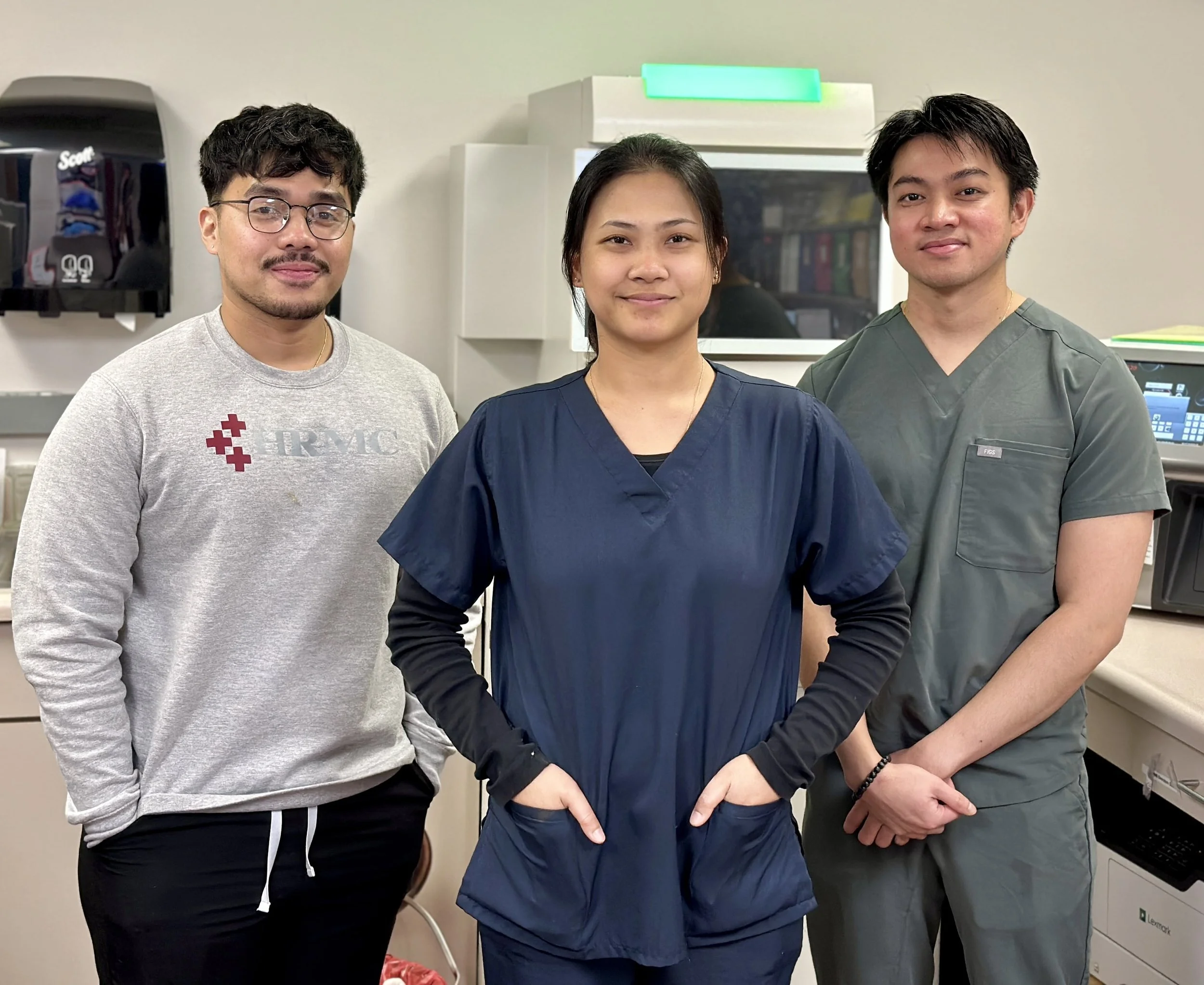
Mike, Loi, and Matthew
Mike, Eloizra (or Loi), and Matthew moved to Huron on H1-B Visas in February 2022. A shortage of laboratory workers in the wake of the pandemic prompted HRMC to reach outside the country for help. Mike had gone to school with Loi and had worked with Matthew at the department of health in Cebu.
The trio connected with an agent and agreed to a three-year work commitment at HRMC as part of an immigration program. The stark winter cold of South Dakota in February was a shock but the three liked the size and diversity of the community - including Asian grocery stores and restaurants - and the intimate feel of the small hospital.
During the holidays, they helped create a piece of art on their whiteboard depicting a festive tree with greetings in a variety of languages. They have enjoyed traveling and exploring the rest of the country during their time-off.
LizaMarie Valencia Feliciano, LPN – Arecibo, Puerto Rico
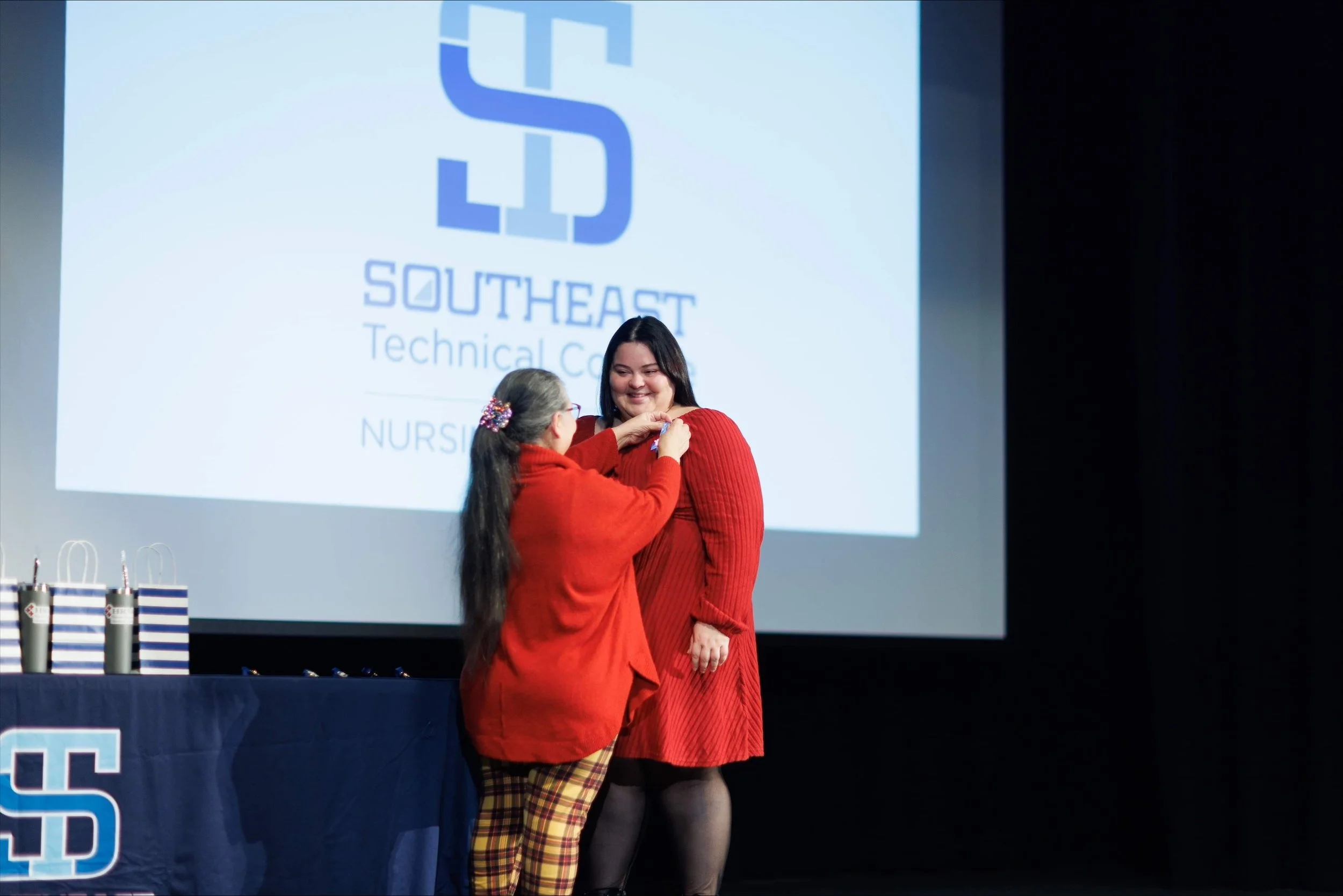
LizaMarie receiving her LPN pin from her mother
LizaMarie moved to Huron Arecibo, Puerto Rico with her family at age 15. She started high school in Huron with a dream of becoming a nurse like her mother. After graduation, though, she held back on enrolling in nursing school because she lacked confidence in her English skills.
Several years later, with encouragement from another nurse, support from HRMC's career outreach director Teresa Haatvedt, RN, BSN, and scholarships from the HRMC Foundation, LizaMarie was able to earn her associate’s degree in nursing from Southeast Technical College. She received her LPN pin from her mother, who had been a nurse in Puerto Rico, and now works at the HRMC Physicians Clinic while pursuing her bachelor's degree in nursing at Southeast Technical College. She is part of a study group of nurses who speak Spanish as their first language.
LizaMarie recalls the uncomfortable feeling of seeking medical care before she was able to speak English and notes the relief she often sees in her patients’ faces when she addresses them in Spanish.
Sau-Mei Ramos, CHW – Humacao, Puerto Rico

Sau-Mei Ramos, a community health worker at HRMC with a BS in nursing, was 25 when she came to the US from Puerto Rico. As a certified CHW, she works to build trust in healthcare and preventative care and helps individuals access important community resources, bridging the gap between healthcare and many social supports.
Helping new and expectant moms is a passion and an area in which she has identified a need. She helps patients to receive education to keep themselves and their babies healthy and also works to ensure they understand the labor and delivery process, helping them to have a positive birth experience.
Ramos recently worked with Norma Torres-Ortiz, RN and Brooke Sydow, EdD, program manager for HRMC, to arrange an opportunity for individuals trained in nursing in other countries to come together to study for the NCLEX exam. The group, including Ramos, consists of six nurses in Huron who will be eligible for a registered RN apprenticeship through HRMC and the South Department of Labor upon receipt of their South Dakota nurses’ license.
Khu Kle Shee – Thailand

Klu Kle Shee (or KK) immigrated to Huron from Thailand with her family when she was just three. As a high school freshman, she worked as a tray aide for the food service department at HRMC, giving her a firsthand opportunity to see the care provided in many areas of the hospital.
With a lifelong desire to work in healthcare and a better understanding of the hospital system, Shee connected with a leader in the laboratory department who helped her gain the training to become a phlebotomist when she turned 18.
As a phlebotomist, Shee feels especially grateful to be able to help the community's Karen patients feel comfortable in their most vulnerable moments. She has even been known to sing to her pediatric patients to make them more comfortable when drawing their blood.
Eager for a challenge and a career in direct patient care, Shee is pursuing an LPN degree at Southeast Technical College with financial support from Build Dakota Scholarship and HRMC Foundation.