
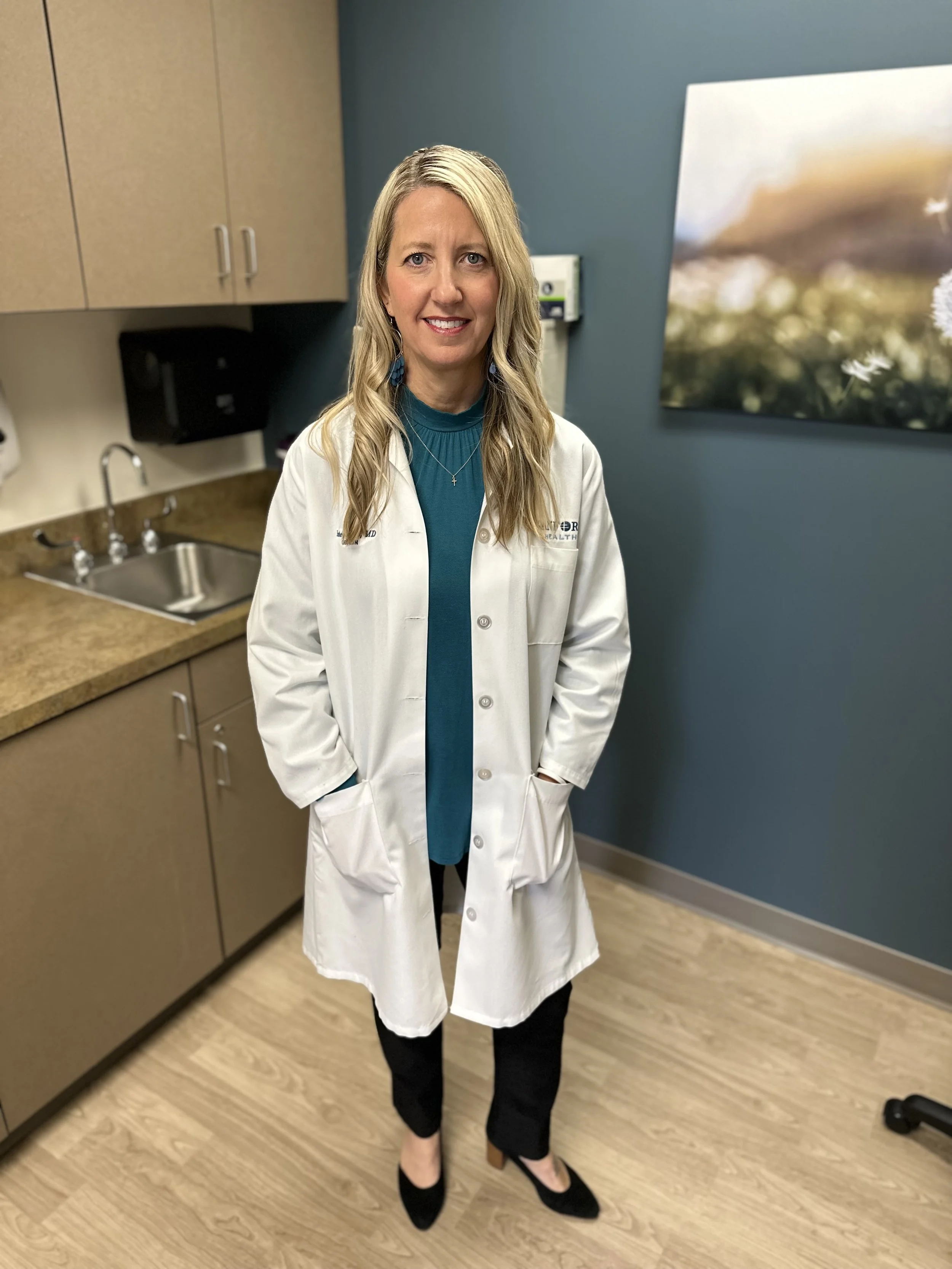
Fostering a Culture of Wellbeing at Sanford; Heather Spies, MD, Physician Director, Clinician Experience and Wellbeing
Long before the coronavirus was on every clinician's radar, the problem of clinician stress and burnout was already on Sanford's.
"The writing was on the wall years ago," says Luis Garcia, MD, President of Sanford Health’s Clinic division. "If you paid attention to what clinicians were saying, there were already signs that the practice of medicine was not as satisfying as it was 30 years ago."
"The landscape of medicine has completely changed in the last 10 to 20 years," agrees Heather Spies, MD, a practicing Ob/Gyn and Sanford's first Physician Director of Clinician Experience and Well-being. "As of 2020, it became clear that it is literally impossible to keep up with everything in medicine. There are simply not enough hours in a typical day."
And yet, rural states like South Dakota need clinicians more than ever. Health systems lucky enough to find them cannot afford to lose them because of overwork, overwhelm, and exhaustion.
"We want anyone who considers getting into medicine to consider Sanford," says Dr. Garcia, "And if they choose Sanford, we don't want them to consider leaving until retirement."
A Cultural Shift
The concern is not just that doctors will leave. Unrelenting stress has been associated with a drop in clinical performance, which can lead to patient complications.
Sanford's answer has been to invest significant resources into fostering a system-wide "culture of well-being".
"A culture of well-being includes looking at ways to support our clinicians both inside and outside of work," says Garcia. "It is not about a meeting or a strategy. It is a cultural change that tries to understand the journey of a physician throughout their career."
The strategy includes an umbrella of services specific to a provider's career stage. For new physicians, services include a weeklong orientation with an emphasis on well-being, onboarding programs, and mentoring. Established physicians can take advantage of financial planning, counseling, peer coaching, and support through the stress of litigation.
For those nearing the end of their clinical practice, Sanford is developing a "path to retirement" including succession planning and a leadership academy to identify "rising stars".
"From a high level executive standpoint, as we speak about this culture change, you cannot see this as an expense," says Dr. Garcia. "You have to see it as an investment in your greatest asset."
Boots on the Ground
Dr. Spies has been one of those assets at Sanford for 17 years. The Watertown native practiced in her hometown for nine years before transferring to Sioux Falls eight years ago. A few months before the pandemic, she took on her additional role in clinician well-being, a job which now takes half her time.
"Sanford wanted a physician in this role who is continuing to practice," says Spies."A practicing physician can have a better understanding of what's really going on."
One thing that's going on, says Spies, is that even when it may not be humanly possible to keep up with all the tasks confronting them, most clinicians really want to do "all the things". They are super-achievers both by nature and by training. Spies says the gap between what is necessary and what is actually feasible can leave them feeling frustrated, anxious, and defeated.
"Just when you think you're all caught up and you're ready to end your day, twelve more messages can come in," says Dr. Spies. "It's exhausting."
Overcommitted and Overconnected
"Part of the problem is that it takes more time than it used to to keep up with clinical data," says Spies, echoing a sentiment heard nearly everywhere in medicine these days. While EHR systems and patient portals have made it easier to access up-to-the-minute patient information, they have also created confusion around who does what from a technical standpoint.
"A lot of our strategy has been to utilize team-based care along with AI and other tools in EPIC to take some of that clerical burden off of physicians, increase efficiency, and allow them to have as much face-to-face time with their patients as possible," says Spies.
But not everything can be blamed on tech. Spies says a lot of clinician stress is the result of a societal tendency to overcommit and be constantly connected.
"I can look up my patient's labs while I'm at my son's baseball game. But it can also be a hard thing to draw boundaries around," says Spies. "We are all busier than ever in our lives outside of work. But we all need a balance or integration between our work and our life."
What's Working Now
In spite of the pandemic and the extra stress of the last few years, Sanford Health is one of only a handful of health systems in the country where the number of clinicians reporting burnout has not increased. Spies and Garcia say the challenge now is to reduce that number and that depends on normalizing something that was once taboo.
"We want our physicians and APPs to be able to speak up when they are not doing ok, to reach out and ask for support and resources," says Spies. There is evidence that the tide is turning. Utilization of Sanford's expanded team of mental health professionals and peer coaches is steadily increasing.
Spies says peer support is also a key component of a "culture of well-being". Sanford's clinical well-being council includes ambassadors and advocates from across the region who lead small peer support groups of international physicians, mid-career physicians, female physicians, APPs, and others.
"The journey has been to continue to find ways to do the best we can in our practice, but also to look around at the people around us and realize that we all go through things," says Dr. Spies. "We have to take the time to recognize when a colleague is struggling and needs help and we need to let them know that it is OK to get it."