
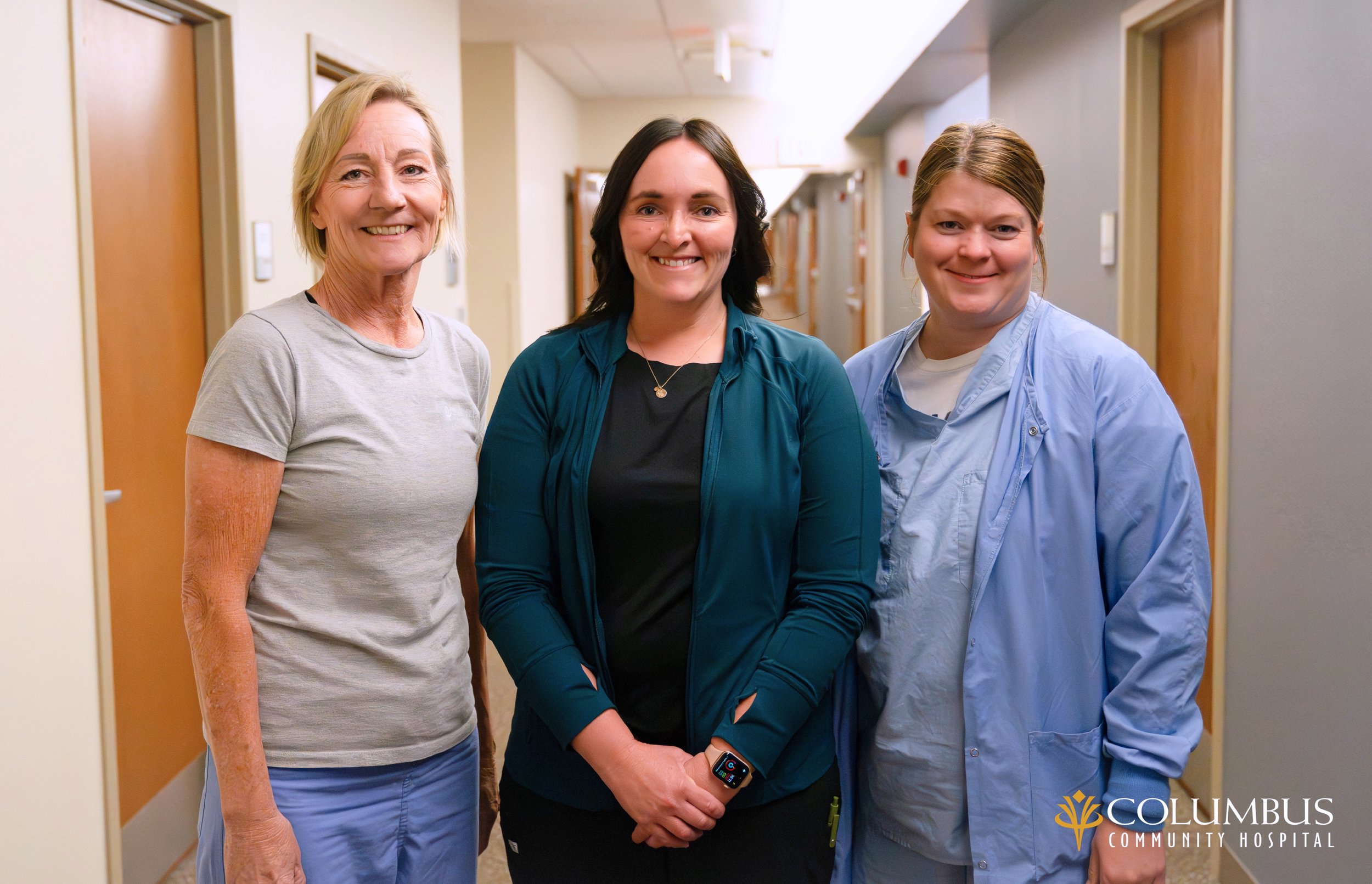
Sue Deyke, Cara Wieser, and Kayla Gehring
A visit to the hospital is frightening for any child — but for one who is neurodivergent, it can be especially worrisome.
That’s why Columbus Community Hospital is creating a program especially for children who are on the autism spectrum, have a sensory processing disorder, have attention-deficit/hyperactivity disorder or experience learning disabilities.
Sue Deyke, MSN, RN, CCH’s emergency director; Kayla Gehring, MBA, MSN, RN, the hospital’s surgical services director; and Cara Wieser, BSN, RN, a preadmissions nurse, have spent months researching different elements of the program. Team members’ research included collaborating with the PATCH (Patient Assistance Team) program at Children’s Nebraska, a specialized initiative that creates individualized adaptive care plans for neurodivergent children.
“We will not be bringing the PATCH program to our hospital,” noted Deyke. “But we used their example to determine what kinds of tools we should be looking for in our own program.”
Last fall, team members asked the CCH Foundation board for funds to support the new program, and the board approved. “The CCH Foundation is happy to fund this much-needed equipment,” said Cori Fullner, the foundation’s director. “Having specialized tools and resources for those individuals to make their experience less stressful is a wonderful enhancement for our hospital.”
Using foundation funds, the team purchased a wide range of tools, including:
Noise-canceling headphones
Calming sensory lamps
Fidget spinners and other fidget toys
Weighted lap pads
Bags with sunglasses, headphones and fidget devices for short visits
Stress balls
Sensory stones
Whiteboard and markers
This fall, the team is bringing in the PATCH coordinator to conduct training sessions for nurses, laboratory and radiology staff members, and any other employees who might encounter neurodivergent patients.
“When children come to us with these special needs,” said Deyke, “not only will we have the education, but we will also have the tools to make it the best experience we can.”