
Built to Last: SDAHO Marks 100 Years as South Dakota Healthcare's 'Unified Voice'
By Alex Strauss
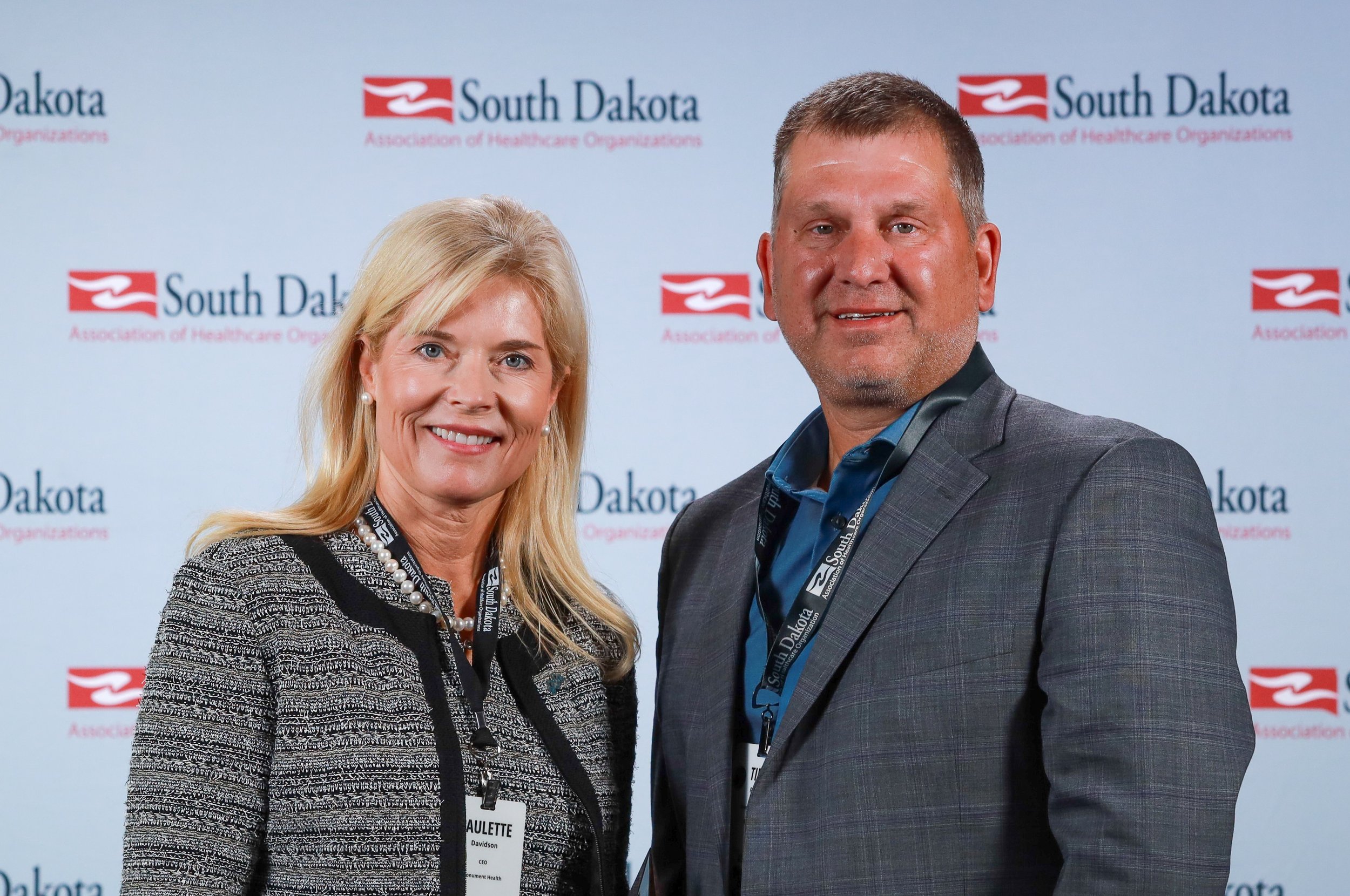
Paulette Davidson, President & CEO of Monument Health and Chair of the SDAHO Board and Tim Rave, President of SDAHO
Every day when Tim Rave walks into work at the office of the South Dakota Association of Healthcare Organizations, he's making history. Rave, who has been at the helm of SDAHO for the past eight years, is only the 6th President and CEO of an organization that has been a fixture of South Dakota medicine for 100 years.
"It is pretty humbling to be the face of an organization like this," he says. "But I still look forward to getting up and going to work every day. They say that's how you know you're in the right job."
For healthcare professionals spread out across the state's 77,000+ square miles, SDAHO's position as a central resource and a unified voice (a phrase many will recognize at the title of the organization's newsletter) is critical. The association represents 52 hospitals and 120 long-term care facilities (as well as assisted living, hospice, home health, and palliative care organizations), serving as both an advocate and, increasingly, a vital resource.
When policy issues arise, when workforce challenges emerge, when federal funding pressures mount, healthcare leaders continue to turn to SDAHO, an organization whose longevity is based on a foundation that's been growing since 1926.
The Power of a Collective Voice
Monument Health President and CEO and SDAHO board chair Paulette Davidson understands the value of that foundation firsthand. She's been a part of the association for more than a decade—first as representative of a member hospital, then, for the last nine years, as a part of the board.
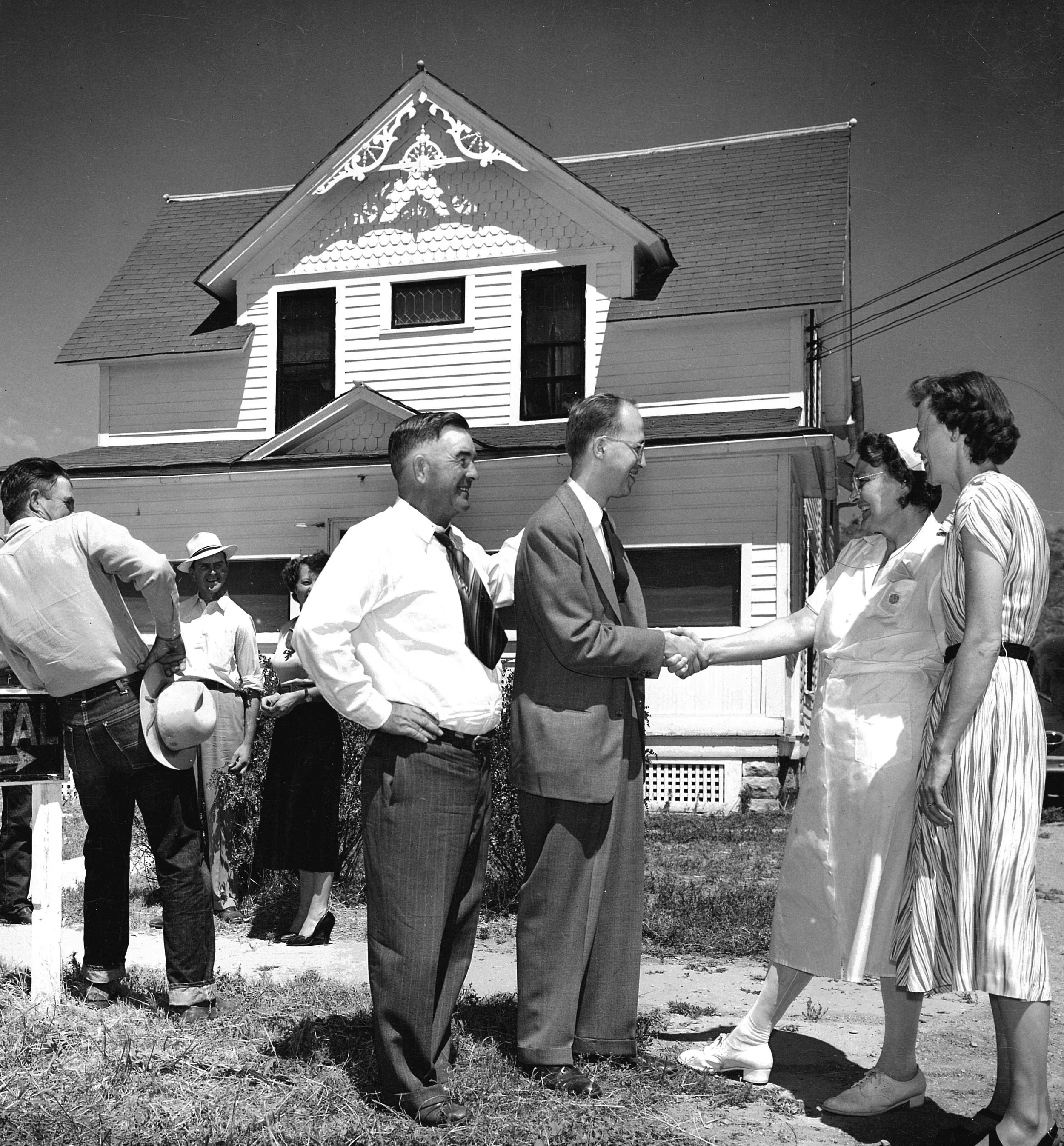
Philip residents congratulate a nurse after a local home was purchased for use as a hospital in 1946 (Photo courtesy the South Dakota Historical Society, South Dakota Digital archive)
"I was really impressed with SDAHO right away when I came to South Dakota," says Davidson, who moved to the state from Nebraska to lead Monument Health. "The level of advocacy and the influence that SDAHO demonstrates is impressive. There isn't one member organization that can do as much for all of our healthcare organizations as SDAHO can by representing all of us."
This collective advocacy approach has been working for SDAHO and its members since its earliest days. In 1932—less than a decade after the association formed—SDAHO's legislative committee successfully convinced a special session of the South Dakota Legislature to allocate nearly half of a newly-created beer tax to counties for "hospitalization of the indigent."
That early victory established a pattern that still stands: when South Dakota's healthcare organizations speak together, legislators listen.
"SDAHO is trusted by the legislature, the governor, and the administration," says Davidson. "They have come to know that SDAHO is focused on creating more access to healthcare and helping healthcare organizations be more successful in their mission."
At Monument Health, that plays out as a kind of partnership. "When we have policy issues, the team at SDAHO is our first call. We want to make sure that our perspective is shared among the other healthcare organizations, but we also know that we're most effective when there is an objective group taking in those opinions and consolidating them. Our viewpoint becomes much stronger when we speak as one."
Evolution: Beyond Advocacy
The earliest iteration of SDAHO, the South Dakota Hospital Association, was formed in 1926 at an informal meeting in Huron. In 1995, the organization experienced one of the most significant evolutions in its long history: The SDHA became the South Dakota Association of Healthcare Organizations, a name change that reflected a decision to unite acute and post-acute care providers under one unified vision.
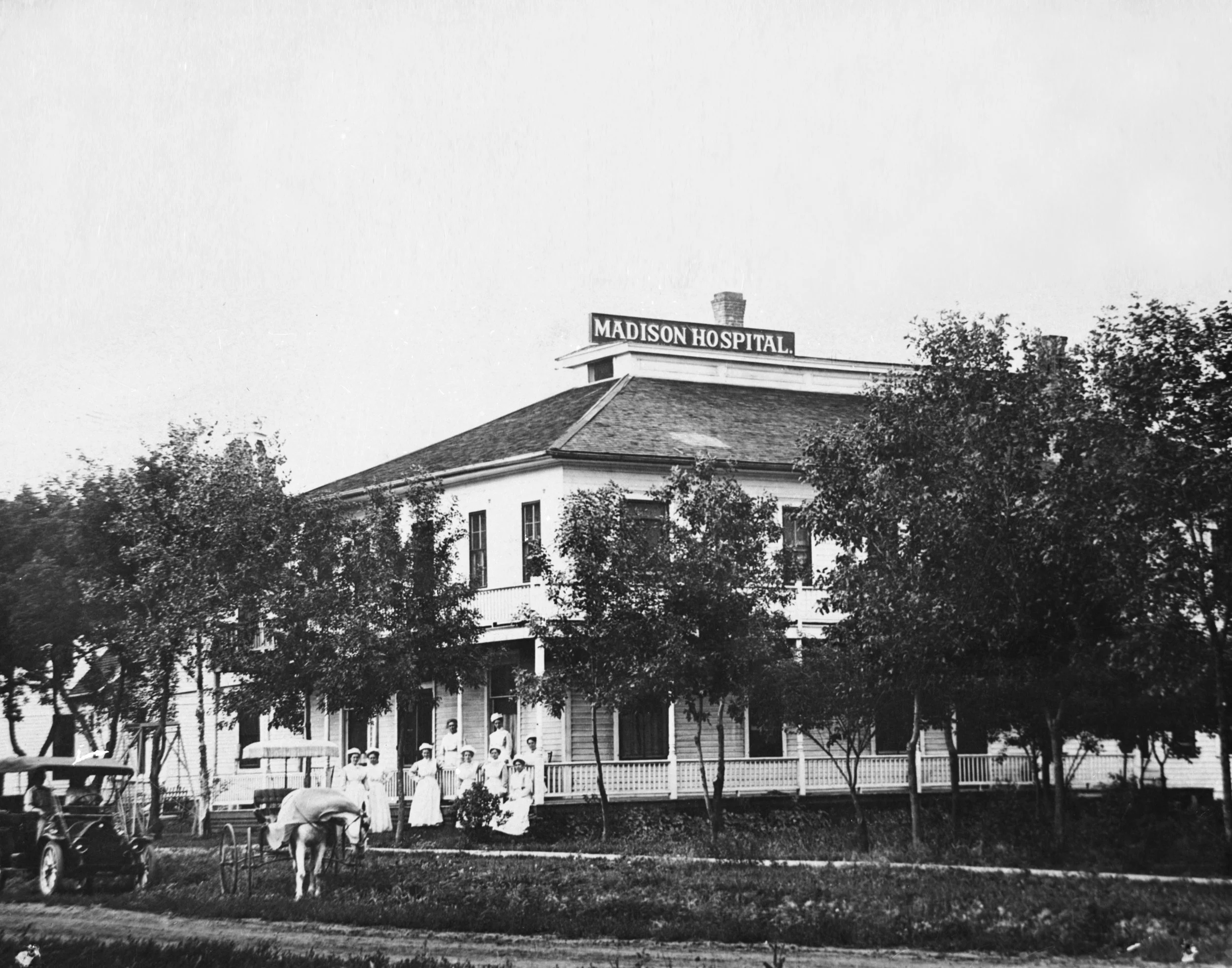
Madison (Clough) Hospital, Madison, South Dakota, circa 1910 (Photo courtesy the South Dakota Historical Society, South Dakota Digital archive)
"We began to see more and more long-term care facilities become part of the association’s membership," says Rave. "With an increase in LTC memberships, the Board decided we needed a more inclusive name. I'm not sure any of them could have imagined the broad spectrum we now represent, including home health, hospice, and palliative care, too."
Today, member organizations range from small Critical Access Hospitals like the 16-bed Community Memorial Hospital in Burke to large, multi-facility health systems like Sanford, Avera, and Monument Health.
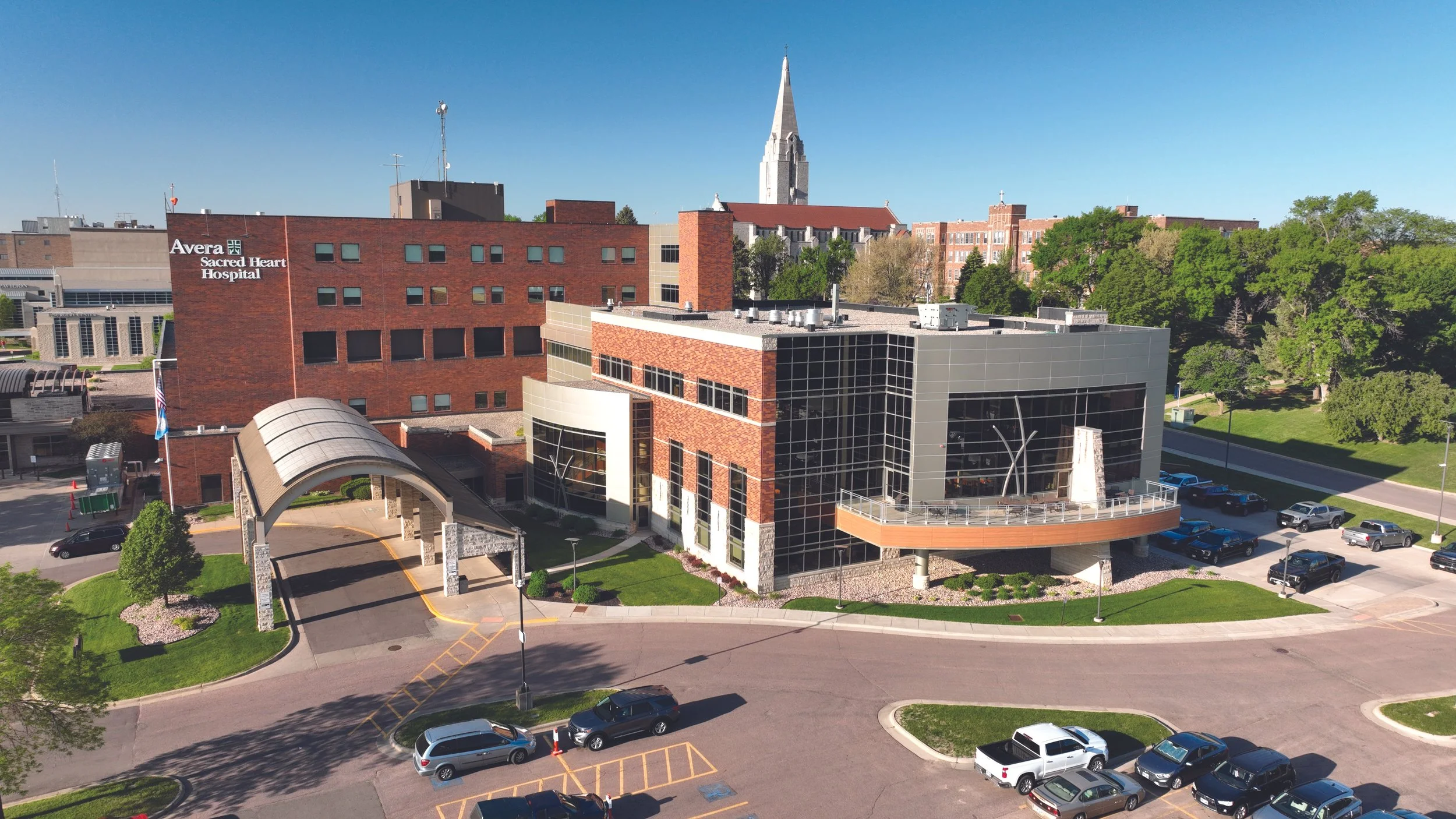
Avera Sacred Heart Hospital, Yankton, South Dakota
And as the scope of members has expanded over the century, so has the spectrum of services SDAHO provides for them. "We're now strategically placed to do three main things: to advocate for, to educate, and to support our members with critical data they need to make decisions," says Rave.
The COVID-19 pandemic was especially pivotal in the expansion of SDAHO's educational arm. "For such an awful time in healthcare, and all the challenges, the pandemic really set us up to be a leader in the region in educational opportunities for our members," says Rave. The virtual classes and workshops SDAHO launched expanded access and engagement, reaching more members by providing a flexible virtual option that made it easier and more convenient to obtain important education and continuing education credits.
The data and support component of SDAHO's work is equally critical for members. SDAHO serves as a repository for key patient data, which is scrubbed for anonymity and made available to members to help guide decision-making.
"Data can support advocacy and advocacy can be education and vice versa," says Rave. "The most important thing is that all of these components are working in unison."
Resilience and Looking Ahead
As the saying goes, 'the more things change, the more they stay the same'. When Rave looks back at old SDAHO meeting minutes, he's struck by how familiar some of it sounds. "Some of the challenges today are just variations of the same challenges we were facing in 1962," he says.
Workforce issues, for instance, are nothing new. Neither are federal funding pressures that have ebbed and flowed for decades. "If anything, healthcare has proven to be resilient against every challenge," says Rave.
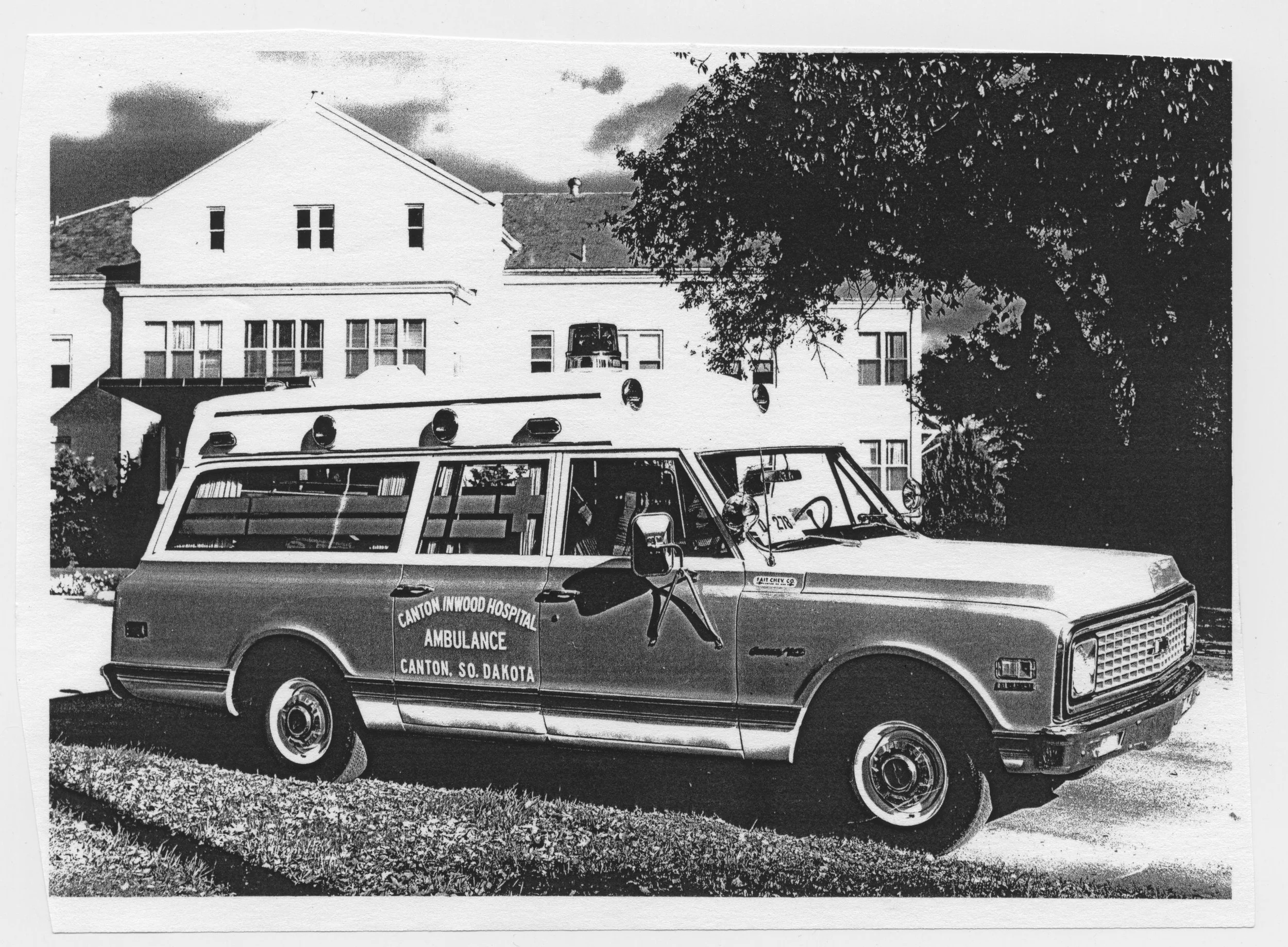
Photo courtesy the South Dakota Historical Society, South Dakota Digital Archive
That resilience - of both healthcare and of SDAHO - is what excites him most about the future. "I see a lot of opportunities for healthcare in the next five years," Rave says. "And the association is well placed to help advocate, educate and support our members well into the next decade and beyond."
Davidson shares that optimism, particularly when she thinks about who will carry SDAHO forward. "When I look around SDAHO, I see the next generation of leaders," she says. "SDAHO will be able to maintain this long tradition of engagement from these ethical leaders from around the state."
She points to SDAHO's 100th anniversary book as evidence of what makes the organization special. "We are recognizing and celebrating generations of community leaders who have maintained a focus on caring for communities and coming together with pure dedication," she says. "They were able to maintain the collaboration and be intentional about the generational handoffs that have taken place in leadership to keep SDAHO very, very influential in our state."
That influence—built on trust, sustained by collaboration, and strengthened by a commitment to South Dakota's healthcare community—shows no signs of diminishing. "I think SDAHO has this staying power that is truly unique among associations," says Davidson.
----------------------------------
SDAHO Upcoming In-Person Events:
March 31 - April 1 - Post Acute Partners in Care Conference, Sioux Falls Convention Center
June 24 - 25 - Rural Health Leaders Conference, Ramkota Inn, Pierre, SD
September 16 - 18 - 100th Annual Convention, Sioux Falls Convention Center