
Basic Brain PET Exams Now Available at Regional West
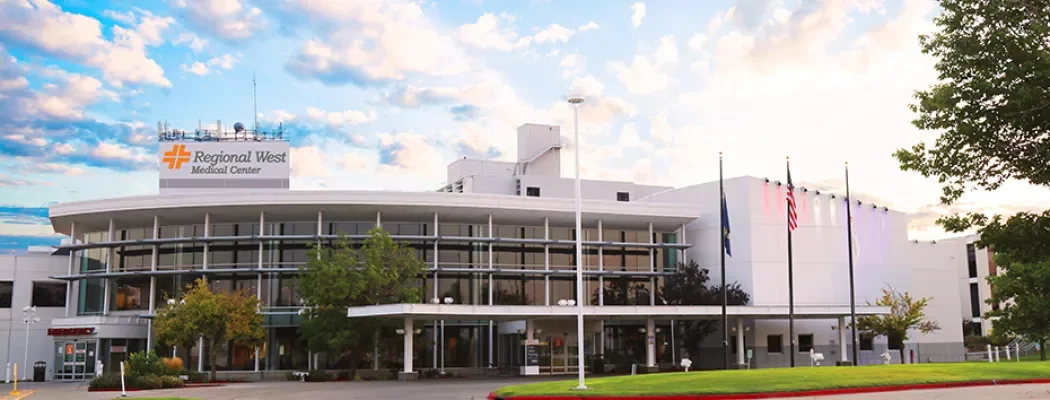
Regional West’s PET/CT department has recently introduced fluorodeoxyglucose (FDG) basic brain PET exams to help diagnose neurological conditions such as Alzheimer’s disease.
Positron Emission Technology (PET) is a nuclear medicine procedure that produces pictures of the body’s metabolism, or chemical activity. During an exam, patients are first injected with a low-dose radioactive tracer that is made of complex sugars labeled with a short-lived isotope. The tracer then moves through the body and is absorbed by cells that aren’t functioning normally. In an FDG basic brain exam, it shows regions of the brain’s metabolic activity and can diagnose and stage neurological conditions such as Alzheimer’s disease.
Regional West is currently the only facility in the panhandle offering these exams. Regional West Imaging Services Director Josh Lively, MHA, BS, R.T.(R)(VI), said these exams can help not only patients who may be suffering from neurological disease, but also their families as they determine treatment options.
“FDG basic brain exams are the next step in growing our PET/CT program. We are excited to expand our services and provide a new study that helps patients and their loved ones decide what care looks like going forward.”
“This new exam provides a peek at the brain in a new light. It can assist with the diagnosis of different types of dementia such as Alzheimer’s disease, frontotemporal dementia, and dementia with Lewy bodies,” added Vanessa Hornstein, CNMT, a technologist in Regional West’s PET/CT department. “We are proud to offer an imaging study that can help find answers for our community members that are struggling with memory loss.”
Referrals are required for an FDG basic brain scan. To see if you or a family member may qualify, visit with your primary care provider or neurologist. To learn more about Regional West’s PET/CT services, visit https://www.rwhs.org/services/other-services/imaging-services/petct-exam.